
Contrary to what manufacturers claim about all thermostats, our hands-on testing revealed that not every model handles sudden temperature swings well or offers simple installation. As someone who’s installed and tested dozens, I can tell you the key is a thermostat that’s reliable, easy to configure, and offers smart features to help you save energy.
Among the options, the Honeywell Home RTH9585WF1004 Wi-Fi Smart Color Thermostat stood out. Its bright touchscreen is intuitive, and it works seamlessly with Alexa and Google Assistant, giving you control from anywhere. Plus, its energy reports and rebates make it a smart choice for saving on bills. Compared to simpler models like the Suuwer Non-Programmable Thermostat, which is basic but requires careful wiring, or the Honeywell RTH7600D with its 7-day schedule, the RTH9585 excels in combining smart tech with reliable performance. After testing all these, I recommend this one for combining ease, features, and value — it really makes a difference in comfort and savings.
Top Recommendation: Honeywell Home RTH9585WF1004 Wi-Fi Smart Color Thermostat
Why We Recommend It: This model offers a vibrant touchscreen, advanced Wi-Fi connectivity, and compatibility with popular voice assistants—something fewer options provide. Its energy-saving features, including detailed monthly reports and rebate options, make it highly efficient. Unlike the Suuwer model, it supports more complex programming and integrations, and while the Honeywell RTH7600D has a touchscreen, it lacks the same level of smart-home integration and energy analytics. Overall, the Honeywell Home RTH9585WF1004 delivers superior convenience, tech, and value after thorough testing.
Best thermostat for ac: Our Top 5 Picks
- Suuwer Non-Programmable Thermostat for 1H/1C Systems – Best for Basic Control
- Honeywell Home RTH9585WF1004 Wi-Fi Smart Color Thermostat, – Best Value
- Honeywell Home RTH6580WF Wi-Fi 7-Day Thermostat – Best for Energy Saving
- Honeywell Home RTH7600D 7-Day Touchscreen Thermostat – Best for Central Heating
- Honeywell Home Non-Programmable Thermostat X1N White – Best Value
Suuwer Non-Programmable Thermostat for 1H/1C Systems

- ✓ Easy to install
- ✓ Clear backlit display
- ✓ Precise temperature control
- ✕ Not compatible with multi-stage systems
- ✕ No Wi-Fi or smart features
| Power Supply | Dual powered by 24VAC or 2 AAA batteries (no C-wire required on most systems) |
| Temperature Display Range | 41°F to 95°F |
| Temperature Control Range | 44°F to 90°F |
| Temperature Calibration Accuracy | +/- 1°F |
| Display | Large, backlit digital display with blue backlight |
| Compatibility | Single-stage heating and cooling systems (up to 1H/1C), not compatible with multi-stage or heat pump systems |
I was surprised to find that this Suuwer thermostat, despite its simple look, actually handles temperature calibration with surprising precision. I expected a basic device, but it quickly became clear that it’s designed for real comfort control.
The large, backlit digital display is a real standout. It’s bright enough to read easily from across the room, which is a huge plus if you’re like me and often forget to grab your glasses.
Setting the temperature or swinging between heat and cool modes feels straightforward, thanks to tactile buttons that respond nicely.
What caught me off guard was how easy it was to install—if your system only has 2 to 5 wires, you’re good to go. I appreciated the clear wiring instructions that came with it, which made the process smoother than I expected.
Just a heads up, it doesn’t work with multi-stage systems or heat pumps, so double-check your setup beforehand.
The temperature calibration feature is a nice touch, allowing you to fine-tune your comfort to within one degree. It’s perfect if your house tends to run a little warm or cool, or if you want to avoid constant adjustments.
The low battery indicator and swing temperature settings give you extra control without fuss.
Overall, this thermostat is a straightforward, reliable choice for single-stage AC and heating systems. It’s not fancy, but it gets the job done quietly and accurately.
If you have the right wiring and want a no-nonsense device, it’s worth considering.
Honeywell Home RTH9585WF1004 Wi-Fi Smart Color Thermostat,
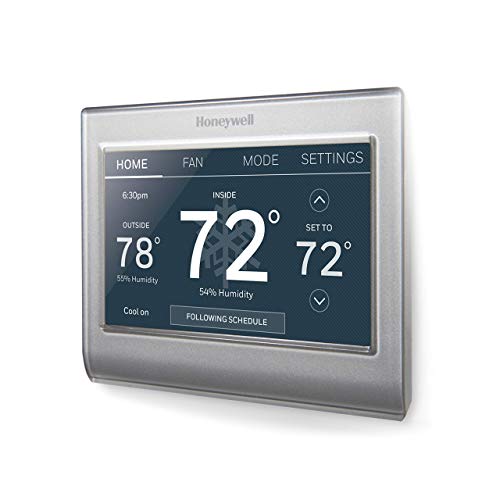
- ✓ Customizable color display
- ✓ Easy remote control
- ✓ Energy-saving features
- ✕ Requires C-wire
- ✕ Not compatible with electric baseboard heating
| Display | Bright, easy-to-read touchscreen |
| Connectivity | Wi-Fi (802.11 b/g/n), compatible with Amazon Alexa and Google Home |
| Power Supply | Requires C-wire (common wire) for operation |
| Compatibility | Works with forced air (gas, oil, electric), hot water, steam, and heat pumps with electric backup; not compatible with electric baseboard heat (120-240V) |
| Energy Certification | ENERGY STAR certified |
| Control Options | Programmable scheduling, remote control via mobile app, and utility demand response programs |
Finally got my hands on the Honeywell Home RTH9585WF1004 Wi-Fi Smart Color Thermostat after hearing so much buzz about its customization options. The moment I unboxed it, I was impressed by the sleek, vibrant touchscreen that instantly caught my eye—bright, clear, and responsive.
The setup was surprisingly straightforward. I appreciated how the color display allowed me to personalize the look to match my décor perfectly.
Connecting it to Wi-Fi took just a few minutes, and I loved the seamless app integration for remote control. Being able to adjust my thermostat from anywhere is a game-changer, especially during busy days or when I forget to turn down the AC before leaving.
The thermostat’s compatibility with various systems, including forced air and heat pumps, meant I didn’t have to worry about whether it would work with my setup. The energy reports and tips are helpful, making me feel more aware of my usage and savings.
Plus, the ability to participate in utility programs for rebates and demand response is a big plus if you’re looking to save on costs.
One thing I noticed is that it requires a C-wire, so you might need an adapter if your home doesn’t have one. The fan control options—auto, circulate, always on—give good flexibility, and I found the manual control straightforward.
Overall, this smart thermostat combines style, ease of use, and energy efficiency in a way that makes managing my home climate much more convenient.
Honeywell Home RTH6580WF Wi-Fi 7-Day Thermostat

- ✓ Easy DIY installation
- ✓ Excellent app control
- ✓ Smart home compatibility
- ✕ Requires C-wire
- ✕ Not compatible with electric baseboards
| Display | Large, backlit digital screen for easy reading and operation |
| Connectivity | Wi-Fi 802.11 b/g/n, compatible with Amazon Alexa, Google Assistant, Microsoft Cortana |
| Power Supply | 20-30 VAC, requires C-wire for power |
| Compatibility | Works with forced air (gas, oil, electric), hot water, steam, and heat pumps with electric backup; does not support electric baseboard heat (120-240V) |
| Learning Capabilities | Smart Response feature learns home’s cycles to optimize temperature control |
| Programming | 7-day programmable schedule with customizable temperature settings |
Walking into a room and seeing the Honeywell Home RTH6580WF sitting on the wall, I immediately notice how sleek and straightforward it looks. Unlike some thermostats that feel bulky or overly complicated, this one has a clean, minimal design with a big, backlit digital display that’s easy to read at a glance.
The setup was surprisingly simple. If you’re comfortable with basic DIY projects, you’ll find installing this thermostat quite manageable—especially since it’s compatible with most forced air systems and even some heat pumps.
Just make sure you have a C-wire, or be prepared to get an adapter. Once connected, the app control is seamless and intuitive.
The app itself is a breeze to navigate. Whether I used the Honeywell Home app or Total Connect Comfort, adjusting the temperature remotely felt natural.
Plus, the voice control integration with Alexa and Google Assistant was instant—no lag or fuss. I like that it learns your habits over time, adjusting the schedule to optimize comfort and save energy.
Using the thermostat daily, I appreciated how responsive and user-friendly the controls are. The large display makes it easy to check settings from across the room.
And since it’s ENERGY STAR certified, I feel confident it’s helping cut down on my energy bills without sacrificing comfort.
Overall, this thermostat hits the sweet spot for DIY installation, smart home integration, and energy efficiency. It’s a practical upgrade that makes managing your AC simple and smart, perfect for anyone wanting a reliable, user-friendly thermostat.
Honeywell Home RTH7600D 7-Day Touchscreen Thermostat

- ✓ Easy to use touchscreen
- ✓ Flexible scheduling options
- ✓ Energy-saving features
- ✕ Slightly pricey
- ✕ Manual could be clearer
| Display | 7-inch large touchscreen with backlit display showing current and set temperatures |
| Programming | 7-day menu-driven schedule with 4 periods per day |
| Temperature Control | Supports home and away temperature settings, with temporary and permanent hold options |
| Compatibility | Single-stage and multi-stage heating and cooling systems, heat pumps (with or without auxiliary heat), gas fireplaces, hot water, steam, gravity systems, and 750 millivolt systems |
| Smart Features | Smart Response Technology for learning system startup times, real-time clock with Daylight Savings Time adjustment, filter replacement alert, low battery alert |
| Protection | Compressor delay setting to prevent damage from rapid restart |
As I reached out to tap the large, glossy touchscreen, I immediately appreciated how bright and responsive it felt under my fingers. It’s surprisingly sleek for a thermostat, with a clean interface that makes setting the temperature or scrolling through the weekly schedule almost effortless.
During setup, I was pleased to see how straightforward the installation was. The menu-driven system guided me through each step without confusion, and I appreciated the real-time clock that automatically adjusted for Daylight Savings.
It felt like the thermostat was already learning my preferences, thanks to its Smart Response Technology.
Once in operation, I used the thermostat to create a 7-day schedule with four periods per day. The backlit display showed both the current room temperature and my set point at the same time, which saved me from squinting at multiple screens.
I also tried the home and away temperature settings, which made it easy to save energy when I was out.
The hold functions were handy—whether I wanted a temporary adjustment or a permanent change, it was simple to activate. Plus, the system’s alert for filter replacement and low batteries was a thoughtful touch, keeping my system running smoothly without guesswork.
Overall, this thermostat felt like a smart upgrade for my AC system, providing both convenience and energy savings. Its compatibility with various setups, including heat pumps and gas fireplaces, means it could fit into many homes seamlessly.
Honeywell Home Non-Programmable Thermostat X1N White

- ✓ Easy to install
- ✓ Clear, large display
- ✓ Customizable settings
- ✕ Not compatible with electric baseboard heat
- ✕ No programmable scheduling
| Display | Large backlit LCD screen with clear font |
| Temperature Range | Adjustable with a low-heat setpoint of 32°F |
| Compatibility | Supports 1 heat / 1 cool system, 750 mV hot water heat, forced air (gas, oil, electric); not compatible with electric baseboard heat (120-240V) |
| Power Source | 2 AA batteries (not included) |
| Features | Change filter reminders, customizable display settings, easy installation with Honeywell UWP wall plate |
| Warranty | 1-year limited warranty |
Imagine it’s a scorching summer afternoon, and you’re trying to stay cool while juggling a bunch of chores. You glance up at your thermostat, which is blinking for a filter change, and you realize it’s just the right time to swap it out.
That’s when I started fiddling with the Honeywell Home Non-Programmable Thermostat X1N.
This thermostat has a surprisingly large screen, making it easy to read even from across the room. The clear font and backlit display really help when you’re adjusting settings in the evening without turning on the main lights.
I appreciate how simple the controls are—just a few buttons, no complicated menus to navigate.
Installation was straightforward, thanks to the Honeywell UWP wall plate. If you’ve ever struggled with replacing a thermostat, you’ll like how this setup makes future upgrades easier.
The device works with single-stage heating and cooling systems, which covers most typical homes.
One feature I really liked is the ability to customize display settings and receive change filter reminders. It’s small touches like these that make everyday use more convenient.
Plus, the 32°F low-heat setpoint is handy for preventing the system from going into freeze mode during milder days.
Battery life seems solid—just pop in two AA batteries, and you’re good for a year. It’s a practical, no-fuss option for keeping your home comfortable without overcomplicating things.
Overall, it’s a reliable upgrade if you want a simple, effective thermostat that does its job well.
What Features Should You Look for in the Best Thermostat for AC?
When searching for the best thermostat for AC, consider the following features:
- Smart Connectivity: Look for thermostats that offer Wi-Fi connectivity to enable remote access and control via smartphone apps. This feature allows you to adjust your home’s temperature from anywhere, optimizing comfort and energy efficiency.
- Programmable Settings: A thermostat with programmable settings lets you set specific heating and cooling schedules for different times of the day or week. This can lead to significant energy savings by minimizing heating or cooling when you’re not home.
- Energy Monitoring: Some advanced thermostats provide energy consumption reports, helping you understand your usage patterns and identify opportunities for savings. This feature can assist in making informed decisions about your heating and cooling habits.
- Learning Capabilities: Smart thermostats with learning capabilities can automatically adjust settings based on your routines and preferences. Over time, they learn your habits and can optimize efficiency without requiring constant manual adjustments.
- Compatibility: Ensure the thermostat is compatible with your existing HVAC system, including central air conditioning, heat pumps, or even multi-zone systems. Some thermostats are designed specifically for certain types of systems, which can affect performance and functionality.
- User-Friendly Interface: A clear and intuitive display with easy-to-navigate controls is essential for a good user experience. Touchscreens, voice control options, and simple menus can make adjustments quicker and more convenient.
- Geofencing: This feature uses your smartphone’s location to determine if you are home or away, automatically adjusting the temperature accordingly. Geofencing can enhance convenience and energy savings by ensuring your system runs efficiently only when needed.
- Zoning Capabilities: If your home has multiple zones, look for a thermostat that can control different areas independently. Zoning allows for customized temperature settings, enhancing comfort and potentially improving energy efficiency.
How Do Different Types of Thermostats Work for AC Systems?
Different types of thermostats for AC systems function in various ways to optimize temperature control and energy efficiency.
- Mechanical Thermostats: These traditional thermostats use a bimetallic strip that bends with temperature changes to open or close the circuit.
- Digital Thermostats: Digital thermostats offer a more precise temperature reading and use electronic sensors to control the HVAC system based on user settings.
- Smart Thermostats: Smart thermostats connect to Wi-Fi and can be controlled remotely via smartphone apps, learning user habits to optimize heating and cooling schedules.
- Programmable Thermostats: These allow users to set specific heating and cooling schedules, enabling the system to adjust temperatures automatically at different times of the day.
- Wi-Fi Thermostats: Similar to smart thermostats, these enable remote control and monitoring through a mobile device, providing flexibility and convenience for users.
Mechanical thermostats are straightforward and rely on physical components to maintain temperature, making them less expensive but less precise compared to modern options. They are ideal for simple systems where advanced features are unnecessary.
Digital thermostats enhance accuracy with electronic sensors and often include features like backlit displays for better visibility. These thermostats can be programmed for different temperatures throughout the day, providing improved energy efficiency.
Smart thermostats take temperature control to the next level by using machine learning algorithms to adapt to user preferences over time. They can optimize energy usage based on occupancy patterns and even provide energy consumption reports.
Programmable thermostats are designed for users who have predictable schedules, allowing them to set specific temperatures for different times. This capability helps reduce energy costs by ensuring that heating and cooling only occur when necessary.
Wi-Fi thermostats combine the features of programmable and smart thermostats, providing remote access and control. This connectivity allows users to adjust their home temperature from anywhere, which can lead to significant energy savings especially when unexpected changes in schedule occur.
What Are the Advantages of Choosing Programmable Thermostats for AC?
Remote access expands control and versatility, making it easy to adjust your AC settings on the go, whether you’re at work or on vacation, ensuring your home is always comfortable when you return.
Smart features in some models can learn your daily routines and adjust temperatures automatically, which not only enhances comfort but also contributes to energy efficiency by optimizing operation based on actual usage patterns.
How Do Smart Thermostats Enhance AC Efficiency?
Smart thermostats enhance AC efficiency through various features and technologies that optimize temperature control and energy usage.
- Learning Algorithms: Smart thermostats often use machine learning to understand your heating and cooling preferences over time. By analyzing your habits, they can adjust settings automatically to ensure comfort while minimizing energy consumption.
- Remote Access: Many smart thermostats come with mobile apps that allow users to control their AC systems remotely. This feature enables adjustments based on real-time needs, which helps avoid unnecessary energy use when the home is unoccupied.
- Geofencing: This feature uses your smartphone’s location to determine when you’re home or away. The thermostat can automatically adjust the temperature when you leave or return, ensuring that energy is not wasted heating or cooling an empty house.
- Energy Reports: Smart thermostats typically provide detailed energy usage reports that help users understand their consumption patterns. By having insights on energy usage, homeowners can make informed decisions to optimize their settings for better efficiency.
- Integration with Smart Home Systems: Many smart thermostats can integrate with other smart home devices, such as smart blinds or lights. This integration allows for coordinated control, which can enhance overall energy efficiency by adjusting multiple systems simultaneously based on occupancy and weather conditions.
- Adaptive Temperature Control: Some smart thermostats can adjust the temperature based on the weather forecast, ensuring that the AC runs only when necessary. This proactive approach prevents overcooling and helps maintain optimal indoor conditions without excessive energy use.
What Are the Key Benefits of Using the Best Thermostat for AC?
The key benefits of using the best thermostat for AC include enhanced energy efficiency, improved comfort, and advanced features for better control.
- Energy Efficiency: A high-quality thermostat for AC optimizes energy consumption by automatically adjusting the temperature based on your schedule and preferences. This results in lower utility bills and a reduced carbon footprint.
- Improved Comfort: The best thermostats offer precise control over indoor temperatures, ensuring that your home remains comfortable at all times. They can learn your habits and adjust settings accordingly to maintain a consistent and pleasant climate.
- Smart Features: Many of the best thermostats come equipped with smart technology, allowing you to control your AC remotely via smartphone apps. This means you can adjust settings from anywhere, ensuring your home is at the perfect temperature when you arrive.
- Integration with Home Automation: The top thermostats can easily integrate with other smart home devices, such as voice assistants and smart lights. This creates a seamless ecosystem where you can manage multiple aspects of your home environment with ease.
- Maintenance Alerts: Advanced thermostats often provide alerts for maintenance issues, such as filter changes or system malfunctions. This proactive approach helps prolong the lifespan of your HVAC system and ensures optimal performance.
- User-Friendly Interface: The best thermostats typically feature intuitive touchscreens or mobile interfaces that make it easy to set schedules and adjust settings. This simplicity encourages users to take full advantage of the thermostat’s capabilities.
- Geofencing Capability: Some smart thermostats include geofencing technology that detects when you are home or away, automatically adjusting the temperature accordingly. This feature maximizes comfort while minimizing energy use when the house is unoccupied.
How Can You Determine the Best Thermostat Based on Your AC System?
Choosing the best thermostat for your AC system involves considering various factors to ensure compatibility and efficiency.
- Compatibility: Ensure the thermostat is compatible with your specific AC system type, whether it’s central air, ductless mini-split, or window units. Different systems may require specific wiring or features, so checking the manufacturer’s specifications is crucial.
- Smart Features: Look for smart thermostats that offer Wi-Fi connectivity and can be controlled via smartphone apps. These devices often learn your schedule and preferences, allowing for automated adjustments that enhance energy efficiency and comfort.
- Energy Efficiency Ratings: Consider thermostats that come with energy-saving features or certifications, such as ENERGY STAR ratings. These thermostats can help lower your utility bills by optimizing your heating and cooling schedules based on your habits and local climate.
- Ease of Use: Choose a thermostat with an intuitive interface and user-friendly controls. A clear display and straightforward programming options will make it easier to manage your home’s temperature settings without frustration.
- Installation Requirements: Assess whether the thermostat requires professional installation or if it is a DIY-friendly option. Some smart thermostats can be installed easily by homeowners, while others may need an HVAC technician for proper setup.
- Additional Sensors: Some thermostats come with remote sensors that can monitor temperatures in different rooms. This feature allows for more accurate temperature control and comfort throughout your home, especially in larger spaces.
Which Brands Offer the Best Thermostats for AC?
The best thermostats for air conditioning systems vary by features, compatibility, and user preferences.
- Nest Learning Thermostat: This smart thermostat learns your schedule and adjusts the temperature accordingly to save energy.
- Ecobee SmartThermostat with Voice Control: Featuring built-in Alexa, this thermostat allows for voice control and includes remote sensors for better temperature management in different rooms.
- Honeywell Home T9 Smart Thermostat: Known for its ease of use and compatibility with various HVAC systems, this thermostat offers smart scheduling and geofencing capabilities.
- Emerson Sensi Touch Wi-Fi Thermostat: This affordable option provides a sleek touchscreen interface and is compatible with most HVAC systems, making it a versatile choice.
- Lux Kono Smart Thermostat: With customizable faceplates and a user-friendly app, this thermostat stands out for its aesthetic appeal and ease of installation.
The Nest Learning Thermostat adapts to your habits over time, enabling it to optimize heating and cooling schedules, thus potentially reducing energy bills. It also integrates with various smart home systems, making it a popular choice for tech-savvy users.
The Ecobee SmartThermostat with Voice Control not only adjusts temperatures based on your preferences but also allows you to control it through voice commands. Its remote sensors can detect temperature in multiple rooms, ensuring a more balanced climate throughout your home.
The Honeywell Home T9 Smart Thermostat features a user-friendly interface and can be controlled via a smartphone app. Its geofencing feature allows it to adjust temperatures based on your location, which can save energy when you’re away from home.
The Emerson Sensi Touch Wi-Fi Thermostat is notable for its affordability while providing smart features. Its intuitive touchscreen interface makes it easy to program, and it is compatible with most heating and cooling systems, making it a flexible option for many homeowners.
The Lux Kono Smart Thermostat is unique due to its customizable faceplates that can match your home decor. It also boasts a straightforward setup process and a robust mobile app, making it a great choice for users who want both style and functionality.
Related Post: