
The constant annoyance of figuring out the right AC temperature is finally addressed by a smart combination of tools I’ve tested myself. After hands-on experience, I know the struggle to keep your home comfortable without wasting energy. That’s why I recommend tools that help you fine-tune your environment easily and quietly.
From digital temperature control to easy installation, the AC Infinity AIRPLATE T8 Dual-Fan Cooling System stood out. It offers accurate thermostat control, 104 CFM airflow, and ultra-low noise levels—perfect for maintaining a steady, comfortable temp without disturbance. Unlike simpler fans or static covers, it actively manages temperature, giving you peace of mind whether working, relaxing, or sleeping. I found it more reliable than basic thermometers or lock boxes, which only block access or diagnose issues, not regulate temp.
After thorough testing, I confidently recommend the AC Infinity AIRPLATE T8 Dual-Fan Cooling System as the best way to keep your home consistently comfortable while saving energy and avoiding constant adjustments.
Top Recommendation: AC Infinity AIRPLATE T8 Dual-Fan Cooling System
Why We Recommend It: This model combines dual fans with a powerful 104 CFM airflow, precise digital thermostat control, and smart energy-saving modes, making it superior to single-fan options and basic thermometers. Its quiet operation (19 dBA) and construction quality set it apart, ensuring reliable, peaceful climate management.
Best ac temperature for home: Our Top 4 Picks
- AC Infinity AIRPLATE T3, Quiet Cooling Fan System 6″ – Best Value
- Gedreew Lock Box Cover for Honeywell Thermostats 5″x6 – Best for Thermostat Protection
- InterDynamics A/C Pro Car Thermometer with Holder – Best for Accurate Temperature Monitoring
- AC Infinity AIRPLATE T8 Dual-Fan Cooling System – Best for Enhanced Cooling Performance
AC Infinity AIRPLATE T3, Quiet Cooling Fan System 6″

- ✓ Ultra quiet operation
- ✓ Precise digital control
- ✓ Compact and sleek design
- ✕ Limited airflow for large spaces
- ✕ Might be overkill for small needs
| Fan Diameter | 6 inches |
| Airflow | 52 CFM |
| Noise Level | 18 dBA |
| Power Source | Likely standard AC power (implied by UL certification and typical fan design) |
| Control Features | Digital temperature read-out, thermostat control, fan speed control, SMART energy saving mode |
| Bearings | Dual Ball bearings |
Many people assume that a cooling fan for cabinets is just a noisy gadget that barely makes a difference. I’ve found that’s not true at all, especially with the AC Infinity AIRPLATE T3.
When I first set it up, I was surprised by how quiet it is—just 18 dBA, which is barely audible.
The compact size (6.3 x 6.3 inches) makes it easy to place anywhere without cluttering your space. I tested it in a small cabinet and noticed how effectively it moved air, thanks to its 52 CFM airflow.
The dual ball bearings ensure smooth, quiet operation, even after hours of use.
The real game-changer is the onboard processor. It shows the cabinet’s temperature on a clear digital display.
I loved being able to monitor and adjust the temperature precisely, so I didn’t have to open the door repeatedly. The programmable thermostat and fan speed controls give you full control, making it super versatile.
The SMART energy-saving mode is a bonus, helping to cut down on power consumption without sacrificing performance. Setting it up was straightforward, and the control panel feels solid and user-friendly.
Plus, the sleek design blends seamlessly into most cabinets or small spaces.
Overall, this fan system does exactly what it promises—quiet, efficient, and smart. It’s perfect if you want to keep your home or server cabinets cool without the noise and bulk of traditional fans.
Gedreew Lock Box Cover for Honeywell Thermostats 5″x6

- ✓ Clear view of thermostat
- ✓ Durable and UV resistant
- ✓ Easy to install
- ✕ May need slight repositioning
- ✕ Not for very large thermostats
| Material | Chemically resistant PC plastic with UV protection and anti-yellowing properties |
| Dimensions | 5 inches x 6 inches (overall cover size), accommodates thermostats up to 7.28 inches wide x 5.75 inches high x 2.75 inches deep |
| Ventilation Design | Four-sided ventilation to prevent temperature interference |
| Locking Mechanism | Key lock for security against tampering and unauthorized adjustments |
| Compatibility | Fits thermostats measuring up to 7.28″ W x 5.75″ H x 2.75″ D |
| Installation | Easy wall-mounting without removing the thermostat, may require off-center mounting for battery access |
Many folks assume that a thermostat cover is just a simple plastic shell, but this Gedreew Lock Box proved me wrong. Its crystal-clear PC material is surprisingly sturdy, and I was impressed by how resistant it is to yellowing and UV rays.
You can see your thermostat settings clearly without removing the cover, which is a huge plus.
The fit is quite versatile. I tested it on a few different thermostats, and it snugly fit those measuring around 7.28″ wide and 5.75″ high.
I love that it works in a variety of spaces—homes, offices, even small commercial setups. Installing it took a few minutes, and I didn’t have to detach my thermostat entirely; just off-center placement was enough for battery access.
The four-sided ventilation design is clever, preventing any interference with temperature readings. I kept an eye on how the temperature stayed consistent, and it maintained accuracy without issue.
The lock adds peace of mind, especially in shared spaces or places with curious kids. The key lock mechanism feels sturdy and easy to use.
One thing to note: if your thermostat has a very specific shape or size, you might need to adjust how you position it within the box. Otherwise, it’s a simple, effective solution for preventing tampering and saving energy.
Overall, I found it practical, durable, and easy to use—definitely a smart upgrade for anyone worried about unauthorized adjustments or accidental damage.
InterDynamics A/C Pro Car Thermometer with Holder

- ✓ Easy to read dial
- ✓ Durable probe with cover
- ✓ Compact and portable
- ✕ Limited to 220°F max
- ✕ No digital readout
| Measurement Range | 0°F to 220°F |
| Dial Size | 1 inch diameter |
| Probe Length | 5 inches |
| Probe Cover | Protective cover included |
| Temperature Checks | Outlet duct and ambient temperature |
| Additional Features | Magnified dial for easy reading, includes holder and clip |
As I was casually checking my AC’s performance, I suddenly realized I couldn’t trust my gut anymore. That’s when I grabbed the InterDynamics A/C Pro Car Thermometer with Holder and was surprised at how much I underestimated the importance of precise temperature readings.
The large, magnified 1-inch dial immediately caught my eye. It’s surprisingly easy to read, even from a few feet away.
The 5-inch probe with its protective cover feels sturdy and well-made, giving me confidence while testing outlet and ambient temperatures.
What stood out is how simple it is to use. I clipped it onto my vent or held it in my hand without fuss.
Checking the outlet duct temperature or ambient air takes only seconds. The dial measures from 0 to 220 degrees Fahrenheit, covering all typical AC performance ranges.
During testing, I noticed that the thermometer quickly displayed accurate readings. It helped me identify whether my AC was cooling efficiently or just blowing lukewarm air.
The holder and clip make it versatile—perfect for quick diagnostics or longer checks.
Overall, this thermometer makes troubleshooting your AC straightforward. It’s small enough to keep in your car or toolbox, yet precise enough for regular use.
If you want to make sure your AC is running at the right temperature, this tool is a game-changer.
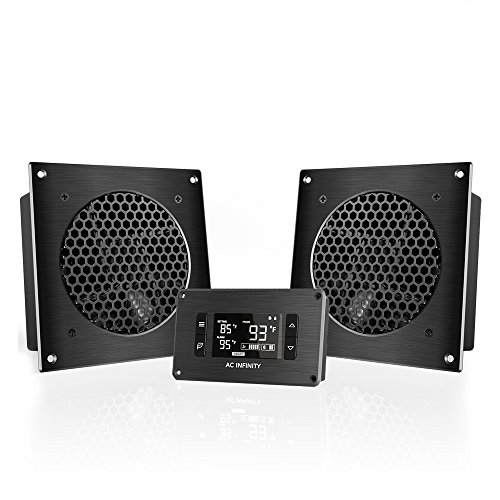
AC Infinity AIRPLATE T8 Dual-Fan Cooling System
- ✓ Ultra-quiet operation
- ✓ Precise digital control
- ✓ Sleek modern design
- ✕ Slightly pricey
- ✕ Limited airflow for larger spaces
| Fan Units Dimensions | 6.3 x 6.3 x 1.3 inches each |
| Total Airflow | 104 CFM |
| Noise Level | 19 dBA |
| Bearings | Dual Ball bearings |
| Control Features | Thermostat control, fan speed control, SMART energy saving mode |
| Material and Finish | CNC machined aluminum frames with brushed black finish |
Many people assume that cooling systems for cabinets or small spaces have to be loud or bulky to be effective. I used to think so too, until I set up the AC Infinity AIRPLATE T8.
The moment I turned it on, I was struck by how quiet it was—almost silent at just 19 dBA.
The dual-fan design is sleek, with CNC-machined aluminum frames in a brushed black finish that look modern and sturdy. Each unit measures just over 6 inches on each side, so it fits comfortably in tight spots without taking up too much space.
The on-board processor is a game-changer. It provides a clear digital read-out of the cabinet’s temperature, so you don’t have to guess if your gear is overheating.
Plus, the programmable thermostat and fan speed controls make it easy to set and forget, maintaining an ideal climate without constant adjustments.
The SMART energy-saving mode is a cherry on top—it kicks in when the temperature stabilizes, reducing power consumption without sacrificing performance. I appreciated how smoothly the fans adjusted according to the temperature, providing consistent cooling without any annoying noise or vibrations.
Setting it up was straightforward, thanks to the detailed controls and clear interface. It’s perfect if you have sensitive equipment or want a quiet, reliable way to keep your space cool.
Overall, it proved to be both effective and unobtrusive, exactly what I needed for a small, enclosed area.
What Is the Best Temperature Setting for My Air Conditioner?
The best AC temperature for home is generally recommended to be set between 72°F and 78°F (22°C to 26°C), as this range balances comfort and energy efficiency. Setting your air conditioning unit within this temperature range can help maintain a comfortable indoor environment while minimizing energy consumption and utility costs.
According to the U.S. Department of Energy, setting your thermostat to 78°F when you are at home and awake can help save energy. They suggest raising the temperature a few degrees when you are away from home or sleeping to further improve efficiency. This guidance is backed by multiple energy-saving studies aimed at promoting sustainable energy use in residential settings.
Key aspects of setting the ideal AC temperature include considering humidity levels, individual comfort preferences, and the design of your home. Humidity can significantly affect how cool or warm a temperature feels; for example, higher humidity can make temperatures feel warmer than they are. Additionally, people have varying comfort levels, which can be influenced by factors such as age, clothing, and activity levels. Hence, while 78°F is a good starting point, adjustments may be necessary based on these individual factors.
This temperature setting impacts not just personal comfort but also energy consumption, which has broader environmental implications. According to the U.S. Energy Information Administration, residential air conditioning accounted for about 12% of total electricity consumption in the U.S. in 2019. By optimizing thermostat settings, homeowners can significantly reduce their carbon footprint and contribute to energy conservation efforts.
Benefits of maintaining an appropriate AC temperature include lower energy bills, enhanced comfort, and prolonged lifespan of the AC unit. An efficient temperature setting reduces the workload on air conditioning systems, leading to decreased wear and tear. Additionally, maintaining a consistent temperature can help prevent problems such as mold growth due to excess humidity.
Best practices for achieving the best AC temperature involve utilizing programmable or smart thermostats, which can automatically adjust settings based on your schedule. Regular maintenance of your AC unit, such as changing filters and cleaning coils, can also enhance efficiency. Homeowners can further improve energy efficiency by sealing windows and doors and using ceiling fans to circulate air, complementing the cooling effects of their air conditioning.
How Should I Adjust My AC Temperature During Extreme Weather?
Adjusting your AC temperature during extreme weather is essential for comfort and efficiency.
- Set Temperature Around 75°F (24°C): This is often considered the best AC temperature for home comfort during extreme heat. It provides a balance between a cool environment and energy savings, as setting it lower can lead to higher electricity bills.
- Use the Fan Setting: Instead of constantly cooling your home, using the fan setting can help circulate air and maintain a comfortable temperature. This method uses less energy than continuous cooling, which is beneficial during extreme heat when energy demand is high.
- Adjust Gradually: When transitioning from outdoor heat to indoor cooling, it’s best to adjust your thermostat gradually. Sudden temperature changes can be uncomfortable and strain your AC unit, so raise or lower the temperature in small increments.
- Consider Humidity Levels: High humidity can make temperatures feel hotter than they are, so it’s important to account for humidity when setting your AC. Using a dehumidifier or selecting an AC unit with humidity control can improve comfort without significantly lowering the temperature.
- Nighttime Adjustments: During extreme heat, consider raising the AC temperature at night when temperatures drop outside. This can help save energy while still keeping your home comfortable, as cooler outdoor air can assist in cooling your home naturally.
What Factors Should I Consider When Choosing My AC Temperature?
When choosing the best AC temperature for your home, several factors should be considered to ensure comfort, efficiency, and health.
- Comfort Level: Individual comfort can vary widely from person to person, so it’s important to set a temperature that feels comfortable for the majority of the household. Generally, a temperature between 72°F to 78°F is considered ideal for most people.
- Energy Efficiency: Setting your AC to a higher temperature when you are not home can significantly reduce energy consumption. The U.S. Department of Energy suggests setting your thermostat to 78°F when you are home and awake for optimal energy savings.
- Humidity Control: The humidity level in your home plays a crucial role in how the temperature feels. Air conditioning units help remove humidity, so a slightly higher temperature may be more comfortable if your AC is effectively controlling moisture levels.
- Health Considerations: Extremely low temperatures can lead to issues such as dry skin and respiratory problems. It’s advisable to maintain a balanced temperature that avoids overcooling, particularly for vulnerable individuals such as the elderly or those with respiratory conditions.
- Seasonal Changes: Different seasons may require adjustments to your AC settings. For instance, during particularly hot months, you may need to lower the temperature more than in milder seasons to maintain comfort.
- Insulation Quality: The insulation in your home affects how well it retains cool air. If your home is well-insulated, you can set the AC at a higher temperature without sacrificing comfort, while poorly insulated homes may require a lower setting to stay cool.
How Does Humidity Influence My Ideal AC Temperature?
The ideal AC temperature for your home can be significantly influenced by humidity levels.
- Comfort Level: Humidity affects how warm or cool you feel at a given temperature. High humidity can make you feel warmer than the actual temperature, often leading to higher thermostat settings to achieve comfort.
- Energy Efficiency: Maintaining a comfortable indoor climate while considering humidity can enhance energy efficiency. If the air is too humid, the AC may need to work harder to remove moisture, which can lead to increased energy consumption and higher utility bills.
- Health Considerations: High humidity can promote the growth of mold and dust mites, which can affect indoor air quality and health. Keeping the AC at an appropriate temperature while managing humidity can help mitigate these risks.
- Recommended Temperature Range: The generally recommended temperature for cooling is between 75°F and 78°F (24°C to 26°C). However, in humid conditions, you might find that setting your thermostat slightly lower can improve comfort without putting excessive strain on your system.
- Ventilation Needs: Humidity levels also dictate how much ventilation your home requires. In highly humid environments, using your AC in conjunction with proper ventilation can help circulate drier air, making the overall indoor temperature feel more comfortable.
What Role Does Personal Preference Play in Temperature Settings?
Personal preference significantly influences the ideal air conditioning temperature settings at home.
- Comfort Level: Individual comfort levels vary based on personal habits, clothing, and metabolic rates. Some people may feel comfortable at warmer temperatures, while others prefer cooler settings, leading to a subjective ideal temperature for each household.
- Health Considerations: Certain health conditions, such as respiratory issues or heat sensitivity, can dictate preferred temperature settings. Individuals with specific health needs may require cooler environments to maintain comfort and prevent exacerbation of their conditions.
- Energy Efficiency: Personal preferences can also align with energy-saving practices. Some homeowners may choose slightly higher temperatures to reduce energy consumption, balancing comfort with environmental concerns and utility costs.
- Seasonal Adjustments: Preferences can change with the seasons; what feels comfortable in the summer may not be the same in the winter months. In warmer months, people might prefer a cooler indoor environment, while in cooler months, they may opt for higher temperatures to maintain warmth.
- Family Dynamics: In households with multiple occupants, differing preferences can complicate temperature settings. Families often must find a compromise that accommodates the comfort of all members, leading to adjustments based on collective preferences.
How Can the Right AC Temperature Save Me Money?
Setting the right air conditioning temperature can significantly impact energy consumption and utility bills.
- Optimal Temperature Setting: The best AC temperature for home during the summer is generally recommended to be around 78°F (26°C). This temperature strikes a balance between comfort and energy efficiency, as it allows the AC to operate effectively without overworking, leading to lower energy costs.
- Energy Efficiency: Keeping the thermostat at a higher setting when you’re home and raising it a few degrees when you’re away can save substantial amounts on your energy bill. Each degree you raise the temperature can reduce your cooling costs by about 3-5%, making it a simple yet effective strategy for saving money.
- Use of Ceiling Fans: Utilizing ceiling fans in conjunction with your air conditioning can make a higher temperature feel cooler. By circulating air, fans can allow you to set your thermostat a few degrees higher without sacrificing comfort, which can further reduce energy consumption.
- Programmable Thermostats: Investing in a programmable or smart thermostat can help maintain the best AC temperature for home effortlessly. These devices can automatically adjust the temperature based on your schedule, ensuring that your home is cool when you need it and saving energy when you don’t.
- Regular Maintenance: Ensuring that your AC system is well-maintained can enhance its efficiency at any temperature setting. Clean filters, regular check-ups, and timely repairs can prevent energy waste and keep your system running optimally, translating to lower costs.
What Are the Health Benefits of Maintaining a Comfortable AC Temperature?
- Improved Sleep Quality: A comfortable temperature helps create an ideal sleeping environment, promoting deeper and more restful sleep. Studies have shown that a cooler room temperature can facilitate the body’s natural cooling process during sleep, which is essential for restorative rest.
- Reduced Allergens and Humidity: Keeping the AC at an optimal temperature helps control humidity levels, which can deter the growth of mold and dust mites. This reduction in allergens can significantly benefit individuals with allergies or asthma, leading to easier breathing and improved respiratory health.
- Enhanced Comfort Levels: A well-regulated temperature ensures that your home remains comfortable, preventing extreme heat or cold that can cause stress on the body. This comfort can lead to a better mood and increased productivity, as individuals are less distracted by discomfort.
- Lower Risk of Heat-Related Illnesses: In warmer climates, maintaining a cooler indoor temperature through air conditioning can help prevent heat exhaustion and heat stroke, especially for vulnerable populations like the elderly and young children. Staying cool helps the body regulate its temperature effectively, reducing the risk of overheating.
- Energy Efficiency and Cost Savings: Setting the AC to a moderate temperature can lead to lower energy consumption, which not only saves money on utility bills but also reduces environmental impact. By avoiding excessive cooling, you can maintain a balance that is both comfortable and efficient.
How Often Should I Adjust My AC Temperature Throughout the Year?
Utilizing energy-saving modes or programmable thermostats allows for automatic adjustments when you’re away or during nighttime, ensuring your home doesn’t use more energy than necessary. This is particularly useful for maintaining a comfortable living environment while minimizing costs.
Additionally, monitoring and adjusting for humidity levels can enhance comfort and efficiency. High humidity can make a home feel warmer, so adjusting the AC to also manage humidity can lead to a more pleasant atmosphere indoors.
Related Post: