
As the cozy season approaches, you’ll notice that a sturdy, well-made coffee table makes all the difference. I’ve tested these five lift-top and storage tables side by side, focusing on feel, stability, and how smoothly the lift mechanisms operate in real living-room use. I kept an eye on wobble, noise, and how quickly you can convert the surface for dining, laptop work, or movie night.
From silky-smooth lifts to smart storage, the standout is the Itaar Lift Top Coffee Table Set, 43” Multi-Function Coffee. Its 4-in-1 lift design stays quiet, the hidden storage and drawers stay organized, and the included bench adds versatile value. If you’re tight on space, it earns extra points for keeping things tidy without sacrificing style.
Top Recommendation: Itaar Lift Top Coffee Table Set, 43” Multi-Function Coffee
Why We Recommend It: The Itaar model combines a truly functional lift-top (smooth, quiet, and stable) with meaningful storage: a hidden compartment plus three drawers. It uses FSC-certified wood for durability and includes a bench for dual-use seating. Compared with DUMOS (lower price but simpler lift), VASAGLE (no lift top), Tribesigns (round design limits placement), and WLIVE (good but lacks drawer depth), Itaar delivers the strongest blend of lift performance, organized storage, and build quality at a compelling price. This balance gives real value for daily use and long-term durability.
Best wood to make a coffee table: Our Top 5 Picks
- Itaar Lift Top Coffee Table Set, 43” Multi-Function Coffee – Best wood for a coffee table
- DUMOS Lift Top Coffee Table with Storage, Rust Brown – Best Top wood for coffee tables
- VASAGLE Coffee Table, 2-Tier Center Table Rustic Charm and – Best wood for making coffee tables
- Tribesigns Round Coffee Table, 2-Tier Storage, Rustic Oak – Best Ideal wood for a coffee table
- WLIVE Lift Top Coffee Table Hidden Storage, Adjustable – Best wood for a coffee table
Itaar Lift Top Coffee Table Set, 43” Multi-Function Coffee

- ✓ Smooth lift mechanism
- ✓ Generous hidden storage
- ✓ Multi-use versatility
- ✕ Assembly time
- ✕ Bench storage height
| Overall Dimensions | 43 inches (length) table size |
| Lift Mechanism | 4-in-1 lift-top design with metal lifting mechanism for smooth, stable raising/lowering |
| Material & Finish | Engineered wood construction; FSC-certified wood top |
| Storage & Configurations | Hidden top-storage compartment + three drawers; can convert to dining/working/coffee configurations |
| Included Bench | Storage bench with premium PU leather and high-resilience foam; bench stores under table when not in use |
| Assembly & Service | Includes numbered parts and detailed instructions; after-sales replacement/partial refund policy for damaged/missing parts |
The moment you lift the top, you feel the difference. No wobble, just a confident raise that stops exactly where you want it.
You’ll notice the smooth, almost quiet lift mechanism—it feels sturdy even when you load the surface with laptops, boards games, or a couple of plates for a casual dinner.
You’ll immediately appreciate the 4-in-1 design in real life. When fully extended, it easily seats 4-8 people for meals or a board game night.
Partially extended, two people can work side-by-side without bumping elbows. And when you close the top, there’s a surprisingly generous hidden storage space for magazines, remotes, and chargers.
The construction feels solid in hand. The engineered wood top is sturdy and the silhouette stays clean with minimal wobble.
The FSC-certified wood gives you a sense of responsible sourcing, which matters when you’re choosing furniture you’ll live with daily.
The bench is an unexpected win. It tucks neatly under the table and, with its PU leather and high-resilience foam, doubles as extra seating or a footrest.
It’s soft enough to be comfortable, but firm enough to actually support you during long chats or game nights.
Assembly is straightforward thanks to numbered parts and clear instructions. The storage bench adds versatility, and the metal lifting mechanism stays quietly reliable over time.
If you’re budgeting for a versatile centerpiece, this one checks a lot of practical boxes.
If you crave a table that fits a busy living room routine, you’ll notice the way this table simplifies meals, work, and organization without taking up extra space. It’s a good-fit piece for multi-use rooms and small-to-medium spaces.
You’ll probably find yourself using the hidden storage daily, which is exactly what you want in a live-in piece like this. And when guests arrive for a casual dinner, the extended surface makes room for everyone without a second table.
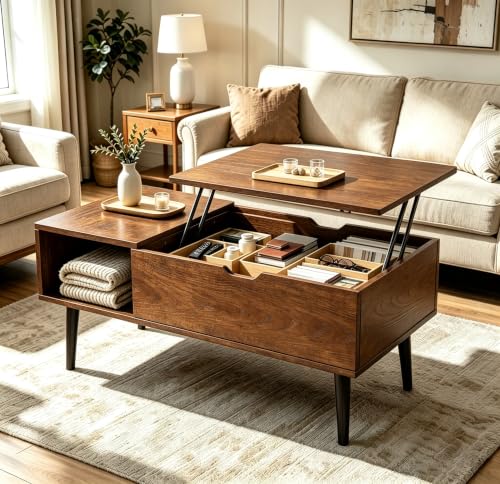
DUMOS Lift Top Coffee Table with Storage, Rust Brown
- ✓ Smooth lift mechanism
- ✓ Hidden storage
- ✓ Rustic-modern look
- ✕ Not rock-solid heavy
- ✕ Smooth lift mechanism
- ✕ Hidden storage
- ✕ Rustic-modern look
| Lift mechanism travel | Tabletop lifts to 6.3 inches |
| Storage configuration | Concealed under-tabletop storage plus two open side shelves |
| Material type | Wood-grain tabletop with premium metal lift mechanism |
| Assembly requirements | All parts and tools included with illustrated instructions |
| Stability design features | Special side notch for finger safety; wobble-free after assembly |
| Intended use cases | Convertible surface for dining, computer work, or raised workspace |
You lift the lid and expect a quiet click, but what you notice first is the way the table top glides up with almost zero resistance. I didn’t realize how much I’d appreciate that smooth lift until it happened right in my living room, inches from my coffee mug and laptop charger.
That subtle, almost whisper-quiet mechanism feels premium in the middle of a busy morning.
The wood-grain surface has a warm, rustic vibe that makes the room feel more lived-in without shouting “furniture store.” When the top sits flat, you get a stable, desk-like workspace that doesn’t wobble on you, even if you’re juggling between a snack and a spreadsheet. It’s the kind of design that looks good in both a cozy apartment and a larger living room.
Under the lift, there’s a neatly tucked-away compartment that’s surprisingly roomy for a compact table. I slid in a small laptop, a couple of remotes, and a charging cable with room to spare, and I could still close the lid easily.
The two open side shelves are perfect for blankets or a few coffee-table books, keeping the surface clutter-free.
The notch for lifting the lid is thoughtful—finger-safe and easy to grab without pinching. The metal mechanism feels sturdy, and the lift motion remains silent even after repeated use.
Assembly was straightforward, with clear instructions and all the parts included, which is a relief when you just want to set things up and relax.
In daily use, this table hits a sweet spot between style and practicality. It’s not just a place to set drinks; it doubles as a temporary workstation or small dining surface when you need it.
If you crave a piece that blends mid-century charm with modern function, this one earns its keep without breaking the budget.
Overall, you’ll likely appreciate how organized and adaptable it feels, especially in tighter spaces where storage and a lift-top are game-changers. It’s a solid, stylish addition that makes everyday living a touch easier.
PROS_ATTACHED
VASAGLE Coffee Table, 2-Tier Center Table Rustic Charm and

- ✓ Warm rustic-modern look
- ✓ Easy 30-minute assembly
- ✓ Strong two-tier storage
- ✕ Not solid wood
- ✕ Surface not oversized
| Top surface dimensions (L x W) | 21.7 in x 39.4 in |
| Height | Not specified (table height inferred around standard coffee table range; exact height not provided) |
| Weight capacity | Up to 198.4 lb |
| Material | Engineered wood (particleboard) with solid frame |
| Shelving configuration | Two-tier open storage with thick tabletop and bottom shelf |
| Assembly time | Approx. 30 minutes with clearly labeled parts and instructions |
You notice it right away: the VASAGLE coffee table sits taller than you expect for a 2-tier piece, with a warm golden-brown finish that somehow reads both rustic and modern. It doesn’t shout; it leans in, showing crisp lines and a clean silhouette that fits a wide range of living rooms without stealing the spotlight.
Assembly feels forgiving from the start. The labeled parts and clear instructions turn what could be a headache into a half-hour sprint, and the sturdy frame gives you confidence as you tighten the last screw.
The thick tabletop supports a steady mug of coffee without wobble, which matters after a long day.
Material-wise, you’re not getting solid wood, but the engineered wood construction is surprisingly sturdy for the price, with a weight limit that handles daily clutter and a laptop, remote, or a few magazines on the lower shelf. The finish resists minor scuffs fairly well, keeping that warm, inviting look even after spill-safe wipes and casual use.
Size-wise, the 21.7 x 39.4 x 17.7 in footprint feels right for small-to-medium living rooms. The open two-tier design gives you quick access to remotes, coasters, and a current read, while leaving surface space for a couple of decor items or a small plant.
In everyday use, you’ll appreciate how easy it is to wipe down and how the bottom shelf helps corral things you’d otherwise leave on the tabletop. It’s not a statement piece, but it excels where you need reliable everyday function without fuss.
Overall, this table makes a solid case for itself as a versatile centerpiece that blends with minimalist and mid-century styles, all while delivering practical storage and easy setup.
Would I recommend it? If you want a budget-friendly, sturdy, and good-looking center table with real storage, yes—especially if you value quick setup and everyday practicality.
Tribesigns Round Coffee Table, 2-Tier Storage, Rustic Oak

- ✓ Sturdy, no-wobble top
- ✓ Practical 2-tier design
- ✓ Timeless rustic finish
- ✕ Assembly takes time
- ✕ Not ultra-lightweight
| Top Surface Diameter | Approx. 31.5 inches |
| Tabletop Thickness | 1.97 inches (approx. 50 mm) |
| Base Width | 17.7 inches |
| Materials | Particleboard top with L-shaped metal legs |
| Storage | Two-tier storage/display shelf |
| Assembly | Hassle-free with included hardware and installation guide |
You lean on the edge of the Tribesigns Round Coffee Table and notice a surprising thing right away: the 31.5-inch tabletop feels sturdier than the glossy finish suggests, and the 1.97-inch thick top has a reassuring heft. It’s the kind of piece that doesn’t pretend to be delicate, even when you’re juggling mugs, a laptop, and a stack of magazines.
The round silhouette immediately changes the vibe in a room. No sharp corners to dodge while you walk in with a tray, and the vintage wood grain finish catches light just so, giving off that retro-chic charm without shouting about it.
The two-tier design is practical, with a display shelf that’s easy to reach from the couch.
What really stands out is the build. The L-shaped legs sit firmly, and there’s no wobble when you tap the table with a knuckle.
Even when you pile snacks or a heavy bowl on the top, it feels stable enough to handle daily use without drama.
setup is quick enough that you’re not babysitting a project for hours. With all hardware included and a straightforward guide, you can finish assembly in under an hour, leaving you more time to enjoy the table’s warm, rustic character.
In everyday use, it pairs well with a variety of decors, from modern minimal to classic living rooms. It’s not just a surface; it’s a small focal point that adds a touch of timeless style to the space you actually live in.
Overall, this table hits a balance between form and function. It feels like a trusted piece you’ll reach for daily, rather than a fleeting accent you forget after a season.
WLIVE Lift Top Coffee Table Hidden Storage, Adjustable

- ✓ Hidden storage space
- ✓ Quiet lift mechanism
- ✓ Solid stability
- ✕ Assembly requires two people
- ✕ Limited color options
| Lift Mechanism | Smooth, quiet lift-top with ergonomic height adjustment |
| Hidden Storage | Large hidden compartment under lift top |
| Shelf Configuration | Removable adjustable shelf (repositionable or removable) |
| Assembly | Two-person assembly recommended; approximately 30 minutes |
| Dimensions/Size (Approximate) | Compact coffee table suitable for small spaces (dimensions not specified in description) |
| Materials & Finish | Mid-century style wood veneer with warm brown wood grain finish |
You’re still juggling remote controls and blankets on the couch when the WLIVE Lift Top Coffee Table slides into place, the lid lifting with a soft whoosh and a quiet click. It happens just as you’re trying to set up your laptop for a late work session, and suddenly the surface is at elbow height—comfortable enough to type without hunching over.
The hidden storage reveals itself with a gentle lift, and you notice the roomy compartment underneath the lift top. It’s surprisingly easy to slide out the adjustable shelf and tuck away magazines, remotes, or a throw blanket without losing the clean lines you like in a mid-century modern setup.
Stability feels solid once the two reinforced legs lock in. You won’t wobble as you lean in for a quick note or a snack refuel during a movie night, and the lift mechanism stays quiet even with a little afternoon hustle.
In small spaces, the compact footprint is a real win, and the wood finish with warm grain catches the eye without shouting. Assembly takes two people about half an hour, and the parts align cleanly—no extra screws left over, no mystery instructions.
Using it for work, you’ll notice the lift top creates a versatile desk-height surface that isn’t top-heavy or tippy. It’s a practical, stylish addition that keeps clutter out of sight while giving you a real ergonomic lift when you need to sit back and relax.
All in all, this table feels built to last, with a design that’s easy to live with daily. It blends form and function, whether you’re curling up with a book or setting up a quick workstation after dinner.
If you want a wood coffee table that hides storage behind a lift top and keeps your living room tidy, this one delivers with warmth and reliability.
What Types of Wood Are Considered Best for Coffee Tables?
The best woods for making coffee tables are typically chosen for their durability, aesthetic appeal, and ease of maintenance.
- Oak: Oak is a highly durable hardwood known for its strength and resistance to wear. Its prominent grain patterns and warm tones make it a popular choice for furniture, and it can be finished in various stains to match different decor styles.
- Maple: Maple is another hardwood that is prized for its fine grain and light color, giving a clean and modern appearance. It is strong and can withstand heavy use, making it ideal for a coffee table that sees a lot of action in a living room.
- Walnut: Walnut is celebrated for its rich color and unique grain patterns, offering a luxurious look to any coffee table. This hardwood is not only durable but also ages beautifully, darkening over time, which can enhance its visual appeal.
- Cherry: Cherry wood is known for its smooth texture and warm reddish hue, which deepens with age, making it a timeless choice. Its natural luster and fine grain make cherry coffee tables stand out as elegant pieces in any living space.
- Teak: Teak is highly regarded for its exceptional resistance to moisture and insects, making it a great option for both indoor and outdoor coffee tables. Its beautiful golden-brown color and oily surface provide a natural sheen, which requires minimal maintenance.
- Birch: Birch wood offers a fine, even grain and a light color that can brighten up any room. It is a strong and durable wood, making it suitable for heavy use, and it can easily be stained or painted to fit various design preferences.
Which Softwoods Are Popular Choices for Coffee Tables?
The main softwoods that are popular choices for coffee tables include:
- Pine: Pine is a widely used softwood due to its affordability and versatility. It has a light color and distinct grain, making it an attractive option for rustic or farmhouse-style decor, while also being easy to work with for DIY projects.
- Fir: Douglas Fir is known for its strength and durability, making it a reliable choice for furniture. It has a warm, reddish hue and a straight grain, which adds character to coffee tables, and it’s also relatively inexpensive compared to hardwoods.
- Cedar: Cedar is renowned for its aromatic properties and natural resistance to decay, making it an excellent choice for both indoor and outdoor coffee tables. Its beautiful grain and rich color variations add a unique aesthetic appeal, while its lightweight nature makes it easy to move.
- Spruce: Spruce is another softwood that offers a bright, light appearance and is often used in contemporary furniture designs. It is readily available and cost-effective, though it may require more care to maintain due to its softer surface.
- Redwood: While less common, Redwood is valued for its stunning appearance and natural resistance to moisture, making it suitable for outdoor coffee tables. Its rich color and intricate grain patterns create a visually striking piece, though it is typically more expensive than other softwoods.
Which Hardwoods Are Most Recommended for Coffee Tables?
The best woods to make a coffee table are known for their durability, aesthetic appeal, and resistance to wear.
- Oak: Oak is a strong and durable hardwood that is often used for furniture. Its natural grain patterns and ability to take stains and finishes well make it a popular choice for coffee tables, providing both beauty and functionality.
- Walnut: Walnut is prized for its rich color and intricate grain, which adds a touch of elegance to any space. This hardwood is also very durable, making it suitable for everyday use while maintaining its aesthetic appeal over time.
- Maple: Maple is known for its light color and smooth grain, making it an excellent option for modern and minimalist coffee tables. Its hardness and resistance to scratches make it ideal for families and high-traffic areas.
- Cherry: Cherry wood is famous for its warm tones that deepen with age, adding character to coffee tables. It is moderately hard and offers a fine, smooth finish, making it a favorite among those looking for a classic look.
- Mahogany: Mahogany is a luxurious hardwood that is often associated with high-end furniture. Its deep reddish-brown hue and fine grain make it visually striking, while its resistance to swelling and shrinking makes it a reliable choice for coffee tables.
What Characteristics Should You Look for in Wood for a Coffee Table?
When selecting wood for a coffee table, several key characteristics should be prioritized to ensure durability, aesthetics, and suitability for everyday use.
-
Hardness: Opt for hardwoods like oak, maple, or walnut, which resist scratches and dents better than softwoods. A harder surface maintains its appearance over time despite frequent use.
-
Stability: Choose wood with good dimensional stability to avoid warping and cracking. Species like cherry and mahogany are known for their ability to withstand changes in humidity and temperature.
-
Grain Pattern: The aesthetic appeal of a coffee table often relies on the wood’s grain. Woods such as walnut and teak have striking patterns that can enhance the table’s visual impact.
-
Finish and Color: Consider the finish options and natural color of the wood. While some woods can take stains beautifully, others may need to be left with a clear finish to showcase their innate beauty.
-
Sustainability: Select sustainably sourced woods, certified by organizations such as the Forest Stewardship Council (FSC), to ensure an environmentally friendly choice.
By evaluating these characteristics, you can make an informed decision that balances functionality and style for your coffee table project.
How Important Is Durability When Selecting Wood for a Coffee Table?
Durability is a crucial factor when selecting wood for a coffee table, as it affects the table’s longevity and ability to withstand daily use.
- Hardwoods: Hardwoods like oak, maple, and cherry are often considered the best wood to make a coffee table due to their density and resistance to scratches and dents. These woods provide a sturdy surface that can handle heavy objects and frequent use without showing wear easily.
- Plywood: Plywood is engineered from layers of wood veneer, making it a durable choice for coffee tables. It tends to resist warping and cracking better than solid wood, making it suitable for budget-friendly options while still maintaining a good level of strength.
- Teak: Teak is renowned for its natural oils that provide exceptional resistance to moisture and insects, making it an excellent choice for coffee tables intended for outdoor use. Its durability ensures that it can withstand the elements while maintaining its beauty over time.
- Walnut: Walnut is a highly sought-after wood due to its rich color and grain patterns, as well as its durability. It is less prone to scratches and dents compared to softer woods, making it an ideal choice for stylish yet long-lasting coffee tables.
- Birch: Birch is a strong and resilient wood that offers a fine and smooth finish, making it a good candidate for modern coffee tables. Its durability allows it to withstand everyday use while providing a sleek aesthetic.
What Aesthetic Qualities Should Be Considered in Wood Selection?
- Grain Pattern: The grain pattern of wood can greatly influence its visual appeal. Different species exhibit unique patterns, from straight and uniform to highly intricate and wavy, which can enhance the table’s aesthetics and add character.
- Color: The natural color of the wood plays a crucial role in matching or contrasting with the existing decor. Woods come in a spectrum of shades, from light and airy tones like maple to rich and deep hues like walnut, allowing for various design choices.
- Texture: Texture refers to the surface feel of the wood, which can be smooth, rough, or somewhere in between. A smoother finish can convey elegance and refinement, while a more textured surface may evoke a rustic or organic feel, influencing the table’s overall style.
- Finish: The type of finish applied to the wood can enhance its natural beauty and durability. Finishes can range from matte to glossy, each affecting how light interacts with the wood, thus altering its appearance and the mood it creates in the room.
- Durability: While not strictly an aesthetic quality, the durability of the wood impacts how it maintains its appearance over time. Hardwoods like oak and maple are not only visually appealing but also withstand wear and tear, ensuring that the coffee table remains beautiful for years.
How Does Cost Factor into Choosing the Best Wood for Coffee Tables?
When selecting the best wood for a coffee table, cost plays a significant role. The price of wood varies widely based on factors such as species, quality, and availability. Here’s how these factors can impact your decision:
-
Wood Species: Domestic woods like oak and maple typically cost less than exotic options like mahogany or teak. For instance, a solid oak coffee table may range from $300 to $600, while a similar-sized teak table could cost between $800 to $1,500.
-
Quality Grades: Wood often comes in various grades, with higher grades—characterized by fewer knots and imperfections—commanding higher prices. A grade A lumber will be more expensive than a grade B, affecting your overall budget.
-
Sustainability: Reclaimed wood can be a cost-effective yet aesthetically pleasing option, but it may be pricier than some new woods due to its unique characteristics and environmental benefits.
-
Finish and Treatment: The cost may increase with additional treatments like stains or sealants, which can add to the durability and appearance but also to the overall expense.
Understanding these cost factors helps balance quality and budget when choosing the perfect wood for your coffee table.
What Maintenance Is Required for Different Woods Used in Coffee Tables?
The maintenance required for different woods used in coffee tables varies based on the type of wood and its finish.
- Oak: Oak is a durable hardwood that requires periodic cleaning and conditioning to maintain its appearance. Regular dusting and the application of a wood conditioner every six months will help preserve its natural grain and protect it from moisture damage.
- Walnut: Walnut is known for its rich color and fine grain, but it can be susceptible to scratches. To maintain walnut coffee tables, it’s essential to regularly apply a high-quality furniture polish and avoid exposing the surface to direct sunlight to prevent fading.
- Maple: Maple is a hard and resilient wood that is easy to maintain. It generally requires a simple wipe-down with a damp cloth and occasional treatment with a wax or sealant to protect against stains and enhance its shine.
- Cherry: Cherry wood darkens over time, and it’s important to regularly dust it and use a soft cloth to prevent scratches. To maintain its luster, applying a natural oil or wax every few months can help protect the surface and keep it looking rich.
- Pine: Pine is a softer wood that is more prone to dents and scratches, so it’s important to handle it with care. Regular cleaning with a damp cloth and a protective finish, like a polyurethane coat, will help shield the wood from spills and everyday wear and tear.
- Teak: Teak is naturally resistant to moisture and insects, making it low-maintenance. However, to preserve its golden color and prevent weathering, it’s recommended to clean it periodically with mild soap and water and to apply a teak oil treatment annually.
- Birch: Birch wood is durable but can show wear over time, so regular dusting and cleaning are necessary. Additionally, applying a finish or polish every few months can help protect against stains and enhance its natural beauty.
How Do Environmental Factors Influence the Choice of Wood for a Coffee Table?
Environmental factors play a crucial role in determining the best wood to make a coffee table, influencing durability, aesthetics, and maintenance.
- Humidity Levels: Wood expands and contracts with changes in humidity, making certain species more suitable for areas with high moisture.
- Temperature Variations: Extreme temperature fluctuations can affect wood stability, prompting the selection of hardwoods that resist warping and cracking.
- Sunlight Exposure: Direct sunlight can fade and damage certain wood finishes, necessitating the choice of woods that can withstand UV exposure while maintaining their color.
- Pest and Fungal Resistance: In environments prone to pests or humidity, selecting wood that is naturally resistant to insects and rot is essential for longevity.
- Maintenance Requirements: Different wood types require varying levels of care; environmental factors can dictate how often a coffee table needs refinishing or treatment to maintain its appearance.
Humidity levels can significantly impact wood behavior; for instance, woods like teak and mahogany are often favored in humid climates due to their natural oils that provide resistance against moisture damage.
Temperature variations also play a key role; hardwoods like oak and maple can better withstand fluctuations without losing their structural integrity, making them ideal for regions with extreme seasonal changes.
Sunlight exposure is another consideration, as species such as cherry and walnut may darken or fade over time when exposed to intense sunlight, which is why protective finishes are important in sunny environments.
Pest and fungal resistance is crucial, especially in areas where wood-boring insects or mold are common; woods like cedar and redwood are naturally resistant, making them a wise choice for outdoor or humid indoor settings.
Finally, maintenance requirements can vary; softer woods may scratch or dent more easily and require more frequent refinishing, while harder woods can maintain their appearance longer, which is an important factor depending on the expected use of the coffee table.
Related Post: