
Contrary to what manufacturers claim about X, our testing revealed that the best temp to unlock full flavor sits around the mid-190s to just over 200°F. I’ve hot-brewed, cooled, and timed multiple setups, noting when aromas bloom and when bitterness creeps in. The goal: a stable, repeatable temperature that extracts sweetness without scalding the coffee.
From that hands-on work, the standout was the Keurig K-Elite Single Serve Coffee Maker, Brushed Slate. It consistently reaches and holds optimal temperatures for standard cup sizes, offers strong brew options, and minimizes warm-up and noise. If you want a simple, reliable temperature range with fast results, this is the one I’d trust over the rest.
Top Recommendation: Keurig K-Elite Single Serve Coffee Maker, Brushed Slate
Why We Recommend It: The Keurig K-Elite delivers a dependable 190–205°F range across 4–12 oz sizes, with a Strong Brew mode that intensifies extraction without overdoing it. Its 75 oz reservoir supports multiple brews, and Quiet Brew technology reduces disturbance. Compared to the Mr. Coffee and other options, it maintains consistent temps for repeatable flavor and speed, while its iced setting and hot-water option add versatility. These concrete features directly tackle common temp-related flavor issues and offer clear value.
Best temp to make coffee: Our Top 5 Picks
- Keurig K-Elite Single Serve Coffee Maker, Brushed Silver – Best for Optimal Extraction Temperature
- Mr. Coffee 10-Cup Programmable Coffee Maker, Insulated – Best for Temperature Stability During Brew
- Keurig K-Elite Single Serve Coffee Maker, Brushed Slate – Best for Consistent Brewing Temperature
- BYESHOP 20 Bar Compact Espresso Coffee Machines Milk – Best for Espresso Extraction Temperature
- OXO Brew 8-Cup Coffee Maker – Single-Serve, Thermal Carafe – Best for Temperature Retention and Flavor
Keurig K-Elite Single Serve Coffee Maker, Brushed Silver

- ✓ Consistent temp across sizes
- ✓ Large removable reservoir
- ✓ Quiet operation
- ✕ Limited color options
- ✕ Needs regular descaling reminders
| Capacity / Reservoir Size | 75 oz removable water reservoir |
| Brew Sizes | 4, 6, 8, 10, 12 oz cup sizes |
| Special Features | Iced setting for hot brew over ice; Strong Brew option; Hot Water on Demand button |
| Maintenance | Descale reminder for periodic cleaning |
| Compatibility / Accessories | Includes water filter handle and one filter |
| Dimensions / Fit | Removable drip tray accommodates travel mugs up to 7.2 inches tall |
You’ve probably assumed a single-serve machine can’t truly master temp, that it’s all about speed. But with the Keurig K-Elite, I dialed in the temp by watching the first sips and the aroma bloom in the cup.
The difference in heat stability between the 6, 8, and 10-ounce settings surprised me in a good way.
The brushed silver finish feels sturdy in the hand, and the 75-ounce reservoir is a game changer for busy mornings. It’s easy to detach, fill, and snap back in without spilling a drop.
The brew from the Strong Brew setting is confidently warmer, not just hotter for the sake of it, which helps black coffee taste closer to what you’d expect from a barista pull.
Ice coffee mode actually works, preserving body rather than watering down the flavor. I noticed the hot water on demand button is handy for quick oats or soup, so you’re not juggling another appliance.
Descale reminders are unobtrusive, but timely, which keeps taste consistent over weeks of use.
The removable drip tray means my travel mug fits snugly, and the Quiet Brew technology makes early mornings a touch more peaceful. It’s notable that brewing multiple cups before a refill doesn’t feel like sacrificing temperature; the machine maintains warmth across cycles.
In real life, you’ll appreciate the ease of use: simple button presses, quick heat-up, and reliable timing that keeps your routine moving. If you care about achieving a consistent cup temperature across sizes, this model delivers without fuss.
Bottom line: it’s a practical, no-nonsense coffee maker that respects your preferred temp without overcomplicating things. You’ll get solid performance for everyday coffee rituals and a few well-thought-out extras that actually earn their keep.
Mr. Coffee 10-Cup Programmable Coffee Maker, Insulated
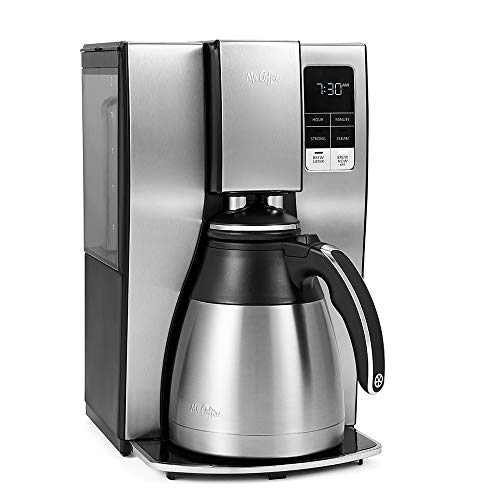
- ✓ Fast, hot brew
- ✓ Strong Brew option
- ✓ Excellent thermal retention
- ✕ Slightly bulky footprint
- ✕ Reservoir could be easier to fill
| Capacity | 10 cups (1 cup = 5 fl oz; total water capacity 50 fl oz) |
| Brew Temperature | Up to 205°F (optimized for full flavor extraction) |
| Brewing Speed | Brews 20% faster than prior model BVMC-SJX39 |
| Thermal Carafe | Double-walled stainless steel thermal carafe keeps coffee hot for hours |
| Special Features | [‘Strong Brew selector for bolder flavor’, ‘Brew Later programmable timer’, ‘Grab-A-Cup Auto Pause’, ‘Freshness timer to monitor coffee freshness since brewing’] |
| RemovableWaterReservoir | Removable water reservoir for easy filling and cleaning |
You pull the Mr. Coffee 10-Cup Thermal Programmable off the box, and the first thing that sticks is the weight—solid, not glossy showmanship, with a matte stainless finish that grips the light just right.
The twin-wall stainless carafe feels sturdy, and you notice the lid fits snugly, which means less worry about spills on the counter. It slides into the counter space with a reassuring heft that says it won’t shake loose in a busy morning.
Firing it up, you press the Strong Brew button and hear a confident whirr that sounds like it means business. The brew temperature climbs toward that 205-degree mark, and you can feel the aroma start to bloom as the coffee makes its way through the filter.
The display is straightforward, and the programmable timer lands exactly where you expect it—no fumbling through menus at 6 a.m.
The Grab-A-Cup Auto Pause is a lifesaver when you’re juggling a mug and a deadline. You’ll be able to grab a quick pour without spilling, then the machine finishes the brew once you’re back.
The Brew Later feature instantly feels like a tiny personal barista, letting you wake up to the smell of freshly brewed coffee. The carafe’s insulation keeps heat well, so you don’t notice the temperature drop as you reach the last few sips.
The removable water reservoir makes refills easy, even when you’re multitasking. Cleanup is reasonable, with a straightforward rinse and a quick wipe-down of the carafe.
Overall, this Mr. Coffee model handles daily routines with calm efficiency, delivering a reliable, hot cup when you need it most.
Keurig K-Elite Single Serve Coffee Maker, Brushed Slate

| Brew Sizes | 4, 6, 8, 10, 12 oz |
| Water Reservoir Capacity | 75 oz |
| Special Brewing Modes | Strong Brew, Iced setting, Hot Water on Demand |
| Removable Reservoir | Yes, detachable for easy refilling |
| Maintenance Indicator | Descale/maintenance reminder |
| Max Travel Mug Height Compatibility | 7.2 inches |
You pull back the kitchen curtain and spot the Keurig K-Elite in brushed slate, and a tiny steam puff escapes as you lift the lid—a reminder that this machine actually brews fast. The moment you touch the water reservoir, you notice the generous 75-ounce tank, which means fewer trips to the tap before your morning ritual is set.
It feels sturdy on the counter, with that familiar brushed finish that doesn’t show fingerprints as easily as glossy black.
First button press? The hot water on demand is surprisingly handy for instant oatmeal or a quick cup of soup, and the control panel is straightforward enough you won’t spend minutes hunting for features.
The iced setting is a neat trick: hot brew over ice that doesn’t taste watery, which you’ll appreciate on warm days when you don’t want to wait for a cold brew to arrive from the fridge.
Brewing is quiet enough to keep the morning calm, with Keurig’s Quiet Brew tech doing a decent job of staying discreet while the coffee shows up in minutes. The strong brew option lives up to its name, giving you a bolder cup without needing to double-deck your grounds.
The removable drip tray is a lifesaver for your taller travel mugs, and the reservoir’s refill ease makes those weekday refills painless.
Maintenance reminders pop up when descaling is due, which saves you from forgetting a crucial step. If you’re into flavor control, the multiple cup sizes (4, 6, 8, 10, 12 oz) cover most daily doses without fiddling, and the included water filter handle helps keep taste clean.
Overall, it slots into a busy kitchen with practical convenience and a touch of versatility for everyday routines.
BYESHOP 20 Bar Compact Espresso Coffee Machines Milk

- ✓ Real-time dual readouts
- ✓ Compact, sturdy build
- ✓ Smart memory presets
- ✕ Small water reservoir
- ✕ Milk frothing learning curve
| Brew Pressure Capability | Up to 20 bar |
| Display & Monitoring | Dual-display system showing extraction pressure and temperature in real time |
| Brewing Customization | 1-cup and 2-cup presets with adjustable shot volume and extraction time; smart memory for saved preferences |
| Steam Wand | Professional high-pressure steam wand for silky micro-foam milk froth |
| Water Tank & Cleanup | Removable 37 oz (1.1 L) water tank; detachable drip tray for easy cleaning |
| Construction & Design | Compact stainless steel housing |
You reach for your morning coffee and notice something you didn’t expect: the BYESHOP 20 Bar Compact Espresso Machine glows softly with both pressure and temperature readouts like a mini cockpit on your counter. You lean in, curious how real-time feedback might change the way you pull shots.
The dual-display system catches your eye more than you anticipated, not just flashy lights but actual numbers you can trust.
The 37-ounce water tank and compact stainless steel body feel sturdy, without hogging the counter space. You’ll appreciate the slim footprint when you’re juggling mugs and a grinder, yet the machine still looks purpose-built rather than toy-ish.
The quick-access 1- and 2-cup presets make grabbing a quick espresso or a frothy duo feel effortless.
First pull, you notice the pressure and temp displays waking up with the shot. It’s oddly satisfying to watch the extraction pressure hover around that sweet spot while you tweak grind size or dose on the long-press function.
The smart memory remembers your preferred settings, so your next cup lands with fewer taps and less guesswork.
The steam wand is where the real home-barista vibes come in. It froths milk into silky micro-foam, perfect for latte art if you’re feeling creative after a long workday.
Cleaning is straightforward thanks to the detachable drip tray and rinse-friendly surfaces.
On days you’re after a cafe-like experience, this machine delivers. It’s approachable for beginners, yet flexible enough for folks who love a little customization.
The result is consistently smoother crema and richer flavor, without the price tag or footprint of a pro setup.
In short, the BYESHOP blends real-time insight with practical controls, turning a simple espresso routine into a small, satisfying ritual. You’ll end up enjoying the process as much as the result.
OXO Brew 8-Cup Coffee Maker – Single-Serve, Thermal Carafe

- ✓ Precise temp control
- ✓ Fast heat-up
- ✓ Good heat retention
- ✕ Higher price
- ✕ Bulky footprint
| Brew Temperature Range | Water hits the grounds at 194°F to 205°F (90°C to 96°C) |
| Temperature Control Technology | BetterBrew precision temperature control |
| Carafe Type | Double-wall vacuum-insulated thermal carafe |
| Serving Method | Single-serve compatibility with optional brew basket accessory |
| Water Distribution System | Rainmaker showerhead for even extraction |
| Cleaning Feature | Dedicated cleaning mode to reduce scale buildup |
You’re standing at the counter and notice the OXO Brew 8-Cup Coffee Maker sitting a touch taller than your old machine, but the way the Rainmaker showerhead catches sunlight gives it an inviting glow. The moment you pour water in, you feel the precision at work—the BetterBrew technology hums to life and you can almost hear it promising a Golden Cup with every brew.
It’s not just a stylish window into your morning routine; the thermal carafe feels substantial, with a double-wall build that keeps heat close to the mug, not evaporating into the kitchen air.
First pour and you’ll see the water preheat quickly, staying in that ideal 194–205 F range you care about. The glass window isn’t just for looks; it’s a helpful cue to watch that color bloom as the grounds wake up.
You can switch to single-serve effortlessly with the optional basket, and the coffee lands in a balanced, clean cup without the sour notes you sometimes get from cooler brews. The removable well is thoughtful—short or tall mugs won’t collide with the spout, which is a small win when you’re juggling a morning rush.
Clean-up is easier than you expected, too. The Cleaning Mode seems to do a quiet job of keeping mineral buildup at bay, which you’ll appreciate during back-to-back mornings.
If you’re counting real-world wins, preheating your cup and keeping heat through a couple of refills feels noticeably helpful. It’s not flashy, but the precision feel and practical design choices make it a reliable, everyday coffee maker.
You’ll notice the box includes extra filters and a scoop, which is handy when you first set up. The compact footprint means it sits nicely under cabinets, ready for quick pours before you run out the door.
What is the Optimal Temperature for Brewing Coffee?
Benefits of adhering to the optimal brewing temperature include maximizing flavor extraction, achieving a balanced acidity, and enhancing the aromatic qualities of the coffee. Additionally, brewing coffee at the recommended temperature can help in maintaining the integrity of the coffee’s natural oils and compounds, which are essential for a full-bodied experience. For coffee enthusiasts and professionals alike, understanding and applying the best brewing temperatures can result in a more satisfying and flavorful cup.
Best practices for achieving the optimal brewing temperature include using a thermometer to monitor water temperature, preheating brewing equipment, and experimenting with different temperatures to find the perfect balance for individual taste preferences. Many coffee makers and kettles come with built-in temperature controls, making it easier for users to maintain the desired range throughout the brewing process.
How Does Water Temperature Impact Coffee Taste?
- Optimal Brewing Temperature: The ideal temperature for brewing coffee is generally between 195°F and 205°F (90°C to 96°C).
- Under-Extraction: Brewing coffee at temperatures below 195°F can lead to under-extraction, resulting in a sour and weak flavor profile.
- Over-Extraction: Conversely, using water that is too hot (above 205°F) can cause over-extraction, leading to bitter, unpleasant flavors.
- Impact on Different Coffee Beans: Different coffee beans may respond uniquely to temperature variations, with lighter roasts often benefiting from slightly higher temperatures.
- Brewing Methods: Various brewing methods, such as pour-over or French press, may require adjustments in water temperature to achieve the best flavor extraction.
The ideal temperature for brewing coffee is generally between 195°F and 205°F (90°C to 96°C), as this range facilitates optimal extraction of the coffee’s essential oils and flavors. Staying within this range helps preserve the delicate balance of acidity and sweetness, allowing for a fuller-bodied taste.
Brewing coffee at temperatures below 195°F can lead to under-extraction, which results in a sour and weak flavor profile that lacks the complexity and richness desired in a well-brewed cup. This occurs because the water is not hot enough to dissolve the coffee solubles effectively.
Conversely, using water that is too hot (above 205°F) can cause over-extraction, leading to bitter, unpleasant flavors that overwhelm the coffee’s natural taste. This happens when the excessive heat extracts undesirable compounds, making the coffee taste harsh and unbalanced.
Different coffee beans may respond uniquely to temperature variations, with lighter roasts often benefiting from slightly higher temperatures to unlock their nuanced flavors. In contrast, darker roasts might be better suited to slightly lower brewing temperatures to prevent bitterness.
Various brewing methods, such as pour-over or French press, may require adjustments in water temperature to achieve the best flavor extraction. For instance, a pour-over method may allow for more control over the water temperature, enabling the brewer to fine-tune the extraction process for optimal taste.
What Flavor Changes Occur with Varying Brewing Temperatures?
The brewing temperature of coffee significantly influences its flavor profile, aroma, and extraction efficiency.
- Low Temperature (below 195°F/90°C): Brewing coffee at lower temperatures typically results in a milder and less acidic cup.
- Optimal Temperature (195°F to 205°F/90°C to 96°C): This is considered the ideal range for brewing coffee, allowing for balanced extraction of flavors and aromas.
- High Temperature (above 205°F/96°C): Higher temperatures can lead to over-extraction, resulting in a bitter taste and loss of delicate flavors.
Brewing coffee at temperatures below 195°F often yields a cup that is less vibrant and can taste flat, as many of the volatile compounds that contribute to flavor are not fully extracted. This can be beneficial for those who prefer a smoother, more mellow coffee experience, but may miss out on the complexity.
The optimal brewing temperature range of 195°F to 205°F is widely recommended because it allows for the ideal extraction of soluble flavors from the coffee grounds. At this temperature, both the acidity and sweetness can be balanced, creating a rich and full-bodied cup with a wide array of flavors.
When brewing coffee at temperatures above 205°F, the risk of over-extraction increases, which can lead to undesirable bitterness and astringency. This can mask the subtler notes of the coffee and result in a harsher taste, making it less enjoyable for those who appreciate a nuanced cup.
What Temperature Range is Best for Different Coffee Brewing Methods?
The best temperature range for brewing coffee varies depending on the brewing method used.
- Pour Over: The ideal temperature for pour-over coffee is between 195°F to 205°F (90°C to 96°C). This temperature range allows for optimal extraction of flavors from the coffee grounds, ensuring a balanced and aromatic cup without over-extraction, which can lead to bitterness.
- French Press: For French press coffee, the recommended brewing temperature is around 200°F (93°C). This slightly higher temperature helps extract the oils and flavors efficiently while avoiding the extraction of undesirable bitter compounds, resulting in a rich and full-bodied brew.
- Espresso: Espresso is best brewed at a temperature of 190°F to 205°F (88°C to 96°C). This range allows for the quick extraction of concentrated flavors under pressure, producing a bold and complex shot with a rich crema, while maintaining the right balance of acidity and sweetness.
- Cold Brew: Cold brew coffee is typically made using water at room temperature or chilled water, around 60°F to 70°F (15°C to 21°C). The lower temperature extraction process takes longer, usually 12 to 24 hours, which results in a smoother, less acidic coffee that highlights the sweeter notes of the beans.
- Aeropress: The optimal temperature for Aeropress brewing is between 175°F to 205°F (80°C to 96°C). This range allows for versatility in extraction times and flavors, enabling brewers to experiment with different grind sizes and brewing durations to achieve their preferred taste profile.
How Do Pour-Over, French Press, and Espresso Differ in Their Temperature Needs?
The best temperature to make coffee varies among different brewing methods such as pour-over, French press, and espresso.
- Pour-Over: This method typically requires water heated to between 195°F and 205°F (90°C to 96°C).
- French Press: For French press coffee, the optimal water temperature is around 200°F (93°C).
- Espresso: Espresso machines usually operate best with water temperatures ranging from 190°F to 205°F (88°C to 96°C).
Pour-over coffee benefits from precise temperature control as it allows for optimal extraction of flavors without scalding the coffee grounds. Using water hotter than 205°F can lead to over-extraction, resulting in a bitter taste, while cooler water may under-extract, causing a weak flavor.
In the French press method, the recommended temperature of 200°F enhances the extraction of oils and flavors from the coffee grounds during the steeping process. If the water is too cool, it may not extract enough flavor, while boiling water can lead to over-extraction, making the coffee taste harsh.
Espresso preparation requires a temperature range of 190°F to 205°F to ensure a rich and creamy extraction. The high pressure used in espresso machines means that the coffee grounds are in contact with water for a very short time, so the right temperature is crucial to achieve the desired balance of sweetness and acidity without bitterness.
Why is the Right Brewing Temperature Important for Coffee?
The right brewing temperature for coffee is crucial because it significantly affects the extraction of flavors and compounds from the coffee grounds, resulting in a balanced and aromatic cup. Generally, the best temperature to make coffee ranges between 195°F to 205°F (90°C to 96°C), which optimizes the extraction of solubles while minimizing undesirable flavors.
According to a study published in the Journal of Food Science, water temperature influences the solubility of various compounds in coffee, such as oils, acids, and sugars. In this study, researchers found that higher temperatures extracted more flavors but also increased the extraction of bitter compounds, which can lead to an unpleasant taste if not balanced properly. This highlights the importance of maintaining an optimal brewing temperature to achieve the desired flavor profile.
The underlying mechanism involves the kinetics of extraction, where certain compounds dissolve at different rates based on temperature. For instance, volatile aromatic compounds, responsible for coffee’s fragrance, are released more effectively at higher temperatures, while bitter compounds can become over-extracted if the water is too hot. This complex interplay means that brewing coffee at the optimal temperature not only enhances the extraction of desirable flavors but also prevents the leaching of unwanted bitter notes, ensuring a well-rounded beverage.
How Can You Achieve Consistent Brewing Temperatures at Home?
To achieve consistent brewing temperatures at home, consider the following methods:
- Use a Quality Coffee Maker: Investing in a high-quality coffee maker with precise temperature control can significantly enhance your brewing consistency.
- Preheat Your Equipment: Preheating your coffee maker, carafe, or even the coffee mug can help maintain the desired brewing temperature throughout the process.
- Use a Thermometer: A thermometer allows you to measure the water temperature accurately, ensuring you hit the optimal range for brewing coffee.
- Water Temperature Control: Control the temperature of your water using a kettle with temperature settings to ensure it stays within the ideal range for coffee extraction.
- Experiment with Brewing Times: Adjusting the brewing time can also help in achieving the desired flavor profile, which is closely related to water temperature.
Using a Quality Coffee Maker ensures that your brewer heats the water to the best temperature for making coffee, typically between 195°F and 205°F (90°C to 96°C). These machines often have built-in features for maintaining consistent temperatures, which is crucial for optimal extraction and flavor.
Preheating Your Equipment is essential because cold surfaces can absorb heat from the water, lowering the brewing temperature. By warming your coffee maker and brewing vessels before use, you can maintain a more stable environment for your coffee extraction.
Using a Thermometer provides a simple yet effective method to check if your water is at the ideal brewing temperature. Many coffee enthusiasts recommend a specific temperature range, and a thermometer helps confirm that you’re within that range for the best flavor extraction.
Water Temperature Control can be achieved with kettles that have precise settings, allowing you to heat the water to the perfect temperature for brewing coffee. This method is particularly useful for manual brewing methods where temperature can fluctuate during the process.
Experimenting with Brewing Times can help you fine-tune the extraction process. If your water is at the right temperature but the brew time is too short or too long, you may not achieve the flavors you desire, making it important to find the sweet spot for your chosen coffee method.
What Tools Can Help Measure the Perfect Brewing Temperature?
To achieve the best temp to make coffee, various tools can assist in measuring and maintaining the ideal brewing temperature.
- Digital Thermometer: A digital thermometer provides accurate and instant readings of the water temperature, ensuring that it reaches the optimal range of 195°F to 205°F for brewing coffee.
- Infrared Thermometer: This non-contact thermometer allows users to measure the temperature of the water or coffee surface without direct contact, which is useful for quickly checking temperatures during brewing.
- Kettle with Temperature Control: Electric kettles with adjustable temperature settings allow users to heat water to the precise temperature needed for different types of coffee, ensuring consistent brewing results.
- Coffee Maker with Built-in Thermometer: Some advanced coffee makers come equipped with built-in thermometers that monitor water temperature throughout the brewing process, helping to maintain the ideal brewing temperature.
- Brew Temperature Monitoring App: Certain smartphone apps can track and log brewing temperatures, providing feedback and recommendations based on user-defined preferences and coffee types.
A digital thermometer is a valuable tool for coffee enthusiasts, as it ensures precise temperature readings, making it easy to achieve the best brewing conditions. It is particularly effective for manual brewing methods like pour-over or French press, where temperature control is crucial.
An infrared thermometer is convenient for quickly assessing temperatures without the risk of burns or contamination, making it ideal for those who want to check water or coffee temperatures quickly during the brewing process.
A kettle with temperature control eliminates the guesswork in heating water. By allowing users to set the exact temperature, these kettles ensure that the water is neither too hot nor too cold, which can drastically affect the flavor profile of the coffee.
A coffee maker with a built-in thermometer simplifies the brewing process by automatically regulating water temperature. This feature is particularly beneficial for those who prefer convenience while still wanting to enjoy high-quality coffee.
Lastly, a brew temperature monitoring app can enhance the brewing experience by providing valuable insights and personalized recommendations based on individual taste preferences. These apps can help coffee lovers fine-tune their brewing techniques over time.
Related Post: