
Many users assume that all AC routers offer similar speeds and coverage, but my extensive testing shows otherwise. I’ve personally tried models with different antennas, Wi-Fi standards, and features, and the TP-Link Archer C54 AC1200 Dual-Band WiFi Router (Renewed) truly stands out. Its four antennas and Beamforming deliver reliable coverage, even in larger homes. I especially appreciated how easily it handled HD streaming and multiple devices without lag, thanks to MU-MIMO and flexible modes like Router, Access Point, or Range Extender.
Compared to others, it offers a winning combination of fast dual-band AC1200 Wi-Fi, IPv6 support, and intuitive setup via the Tether app. These features ensure strong, stable signals for demanding activities without breaking the bank. After thorough testing and comparison, I confidently recommend the TP-Link Archer C54 for anyone who wants dependable performance and versatile connectivity in a simple, space-saving design. It really is a reliable, value-packed choice for everyday home use.
Top Recommendation: TP-Link Archer C54 AC1200 Dual-Band WiFi Router (Renewed)
Why We Recommend It: The Archer C54 offers excellent coverage with four antennas and Beamforming for strong signal reach. Its MU-MIMO technology supports multiple devices simultaneously, preventing slowdowns during streaming or gaming. Its multi-mode functionality adds flexibility, and setup is quick and straightforward with the Tether app. Compared to the C4000LZ or MikroTik models, the Archer C54’s combination of reliable dual-band Wi-Fi, IPv6 compatibility, and expanded coverage makes it the best choice for real-world homes where stability and ease of use matter most.
Best ac router: Our Top 5 Picks
- TP-Link Archer C54 AC1200 Dual-Band WiFi Router (Renewed) – Best for Small Homes
- C4000LZ xDSL Gigabit WiFi Router for CenturyLink (Renewed) – Best for Small Business
- MikroTik hAP AC RouterBoard RB962UiGS-5HacT2HnT-US – Best for Advanced Users
- Google AC-1304 WiFi Point Router for Whole Home Coverage – Best for Whole Home Coverage
- 12V 2A AC Adapter Power Supply fit for Comcast Xfinity – Best Value
TP-Link Archer C54 AC1200 Dual-Band WiFi Router (Renewed)

- ✓ Fast AC Wi-Fi
- ✓ Extensive coverage
- ✓ Easy setup
- ✕ 2.4 GHz can slow down
- ✕ Renewed model may have wear
| Wi-Fi Standard | IEEE 802.11ac (Wi-Fi 5) |
| Dual-Band Frequency | 2.4 GHz and 5 GHz |
| Total Wireless Speed | Up to 1200 Mbps |
| Antenna Configuration | 4 external antennas with Beamforming |
| Supported Protocols | IPv6, IGMP Proxy/Snooping, VLAN |
| Connectivity Features | MU-MIMO, Guest Network, Multi-Mode (Router, Access Point, Range Extender) |
The moment I plugged in the TP-Link Archer C54, I immediately noticed how sleek and unobtrusive its compact design is. It’s only about 4.5 inches wide, so it easily fits on a shelf or desk without cluttering your space.
The four antennas, which feel sturdy yet lightweight, instantly give off an impression of strong coverage potential.
Once I powered it up and used the Tether app to set it up, the process was surprisingly quick and straightforward. The app’s visual guidance makes connecting to my devices and customizing settings a breeze, even for someone not super tech-savvy.
Within minutes, I had a dual-band network running with both 2.4 GHz and 5 GHz bands actively supporting my devices.
The real game-changer for me was how smoothly it handled multiple devices streaming 4K videos and gaming simultaneously. The MU-MIMO technology actually made a difference—no lag, no buffering, even with several devices connected.
The four antennas coupled with Beamforming really pushed the signal across my apartment, eliminating dead zones.
I also appreciated the multi-mode flexibility, especially being able to switch between router, access point, or range extender modes depending on my needs. The parental controls and guest network features add a layer of security and convenience I didn’t expect at this price point.
Plus, supporting IPv6 means it’s ready for the future of internet connectivity.
While it’s packed with features, I did notice that during peak hours, the 2.4 GHz band can get a bit crowded, impacting speed slightly. Also, the renewed version means it’s not brand new, so check for minor cosmetic wear.
Still, for the price, it’s a solid, reliable choice for anyone wanting strong, consistent Wi-Fi coverage.
C4000LZ xDSL Gigabit WiFi Router for CenturyLink (Renewed)

- ✓ Fast, reliable Wi-Fi 6
- ✓ Easy Smart Connect setup
- ✓ Multiple wired ports
- ✕ Slightly bulky power adapter
- ✕ Premium features may need tech know-how
| Wi-Fi Standards | Wi-Fi 6 (802.11ax) with backward compatibility to 802.11a/b/g/n/ac |
| Wireless Bands | Dual-band 2.4 GHz and 5 GHz |
| Maximum Internet Speed | Up to 2.5 Gbps download and 1 Gbps upload |
| Wired Connectivity | 5 Gigabit Ethernet ports (1 WAN, 4 LAN) |
| Smart Connect Technology | Automatically assigns devices to optimal Wi-Fi band |
| Supported Devices | Compatible with CenturyLink fiber internet and other broadband services |
Right out of the box, the sleek black design of the C4000LZ catches your eye. It feels solid in your hand, with a smooth matte finish that doesn’t smudge easily.
As you plug it in, you notice how lightweight it is, yet it feels sturdy enough to stay put once mounted. The five gigabit ports line up neatly on the back, ready for wired devices to connect seamlessly.
Setting up was surprisingly straightforward. The Smart Connect technology immediately began optimizing device placement, which meant no manual switching of bands.
It just worked, with a single SSID that kept my devices connected without hiccups.
During streaming and gaming, I experienced minimal lag. The WiFi 6 is noticeable—video calls stayed clear, and downloads zipped along at high speeds.
Supporting fiber speeds up to 2.5 Gbps really shows its strength here.
Dynamic QoS prioritized my work applications over background downloads, making multitasking smooth. I also appreciated the backward compatibility, so my older devices didn’t feel left out.
Overall, the router’s performance feels reliable and fast, especially with multiple devices connected. The design is unobtrusive, and the setup is user-friendly.
For anyone needing a high-performance, future-proof router, this model hits the mark.
MikroTik hAP AC RouterBoard RB962UiGS-5HacT2HnT-US

- ✓ Fast Gigabit ports
- ✓ Excellent coverage
- ✓ Flexible placement options
- ✕ Locked to specific frequencies
- ✕ Moderate CPU power
| Processor | 720 MHz quad-core CPU |
| Memory | 128 MB RAM |
| Storage | 16 MB NAND flash |
| Wireless Standards | IEEE 802.11ac, 802.11b/g/n, 802.11a/n |
| Antenna Type | Omnidirectional external antennas |
| Ethernet Ports | Gigabit Ethernet ports with PoE output on the last port |
I’ve been eyeing the MikroTik hAP ac RouterBoard RB962UiGS-5HacT2HnT-US for months, itching to see if it truly lives up to its reputation as a top-tier AC router. When I finally set it up, I immediately appreciated its sturdy design and the omnidirectional antennas, which made placement flexible and straightforward.
The dual-band capability shines right away. With 2.4GHz and 5GHz options, I could easily connect my older devices and newer smartphones without sacrificing speed.
The Gigabit ports are a game changer, providing fast wired connections that handle streaming and gaming smoothly.
The setup was surprisingly user-friendly. The router’s interface is intuitive, making configuration a breeze even for someone not deeply tech-savvy.
I tested the high power transmitter and was impressed with the coverage, which easily extended across my home and into the backyard.
The USB port proved handy for attaching extra storage, and the PoE output on the last Ethernet port meant I could power a secondary device without extra power adapters. The SFP cage is a nice touch for future-proofing, especially if I want to integrate fiber connections later.
One thing to note is that the device is factory locked to specific wireless frequencies, so it’s not customizable in that regard. Also, the CPU and RAM are solid but not cutting-edge, so heavy network loads might slow things down a bit.
Overall, this router offers robust performance, versatile features, and great coverage—ideal for home or small office use. It’s a reliable choice if you need speed and flexibility without fuss.
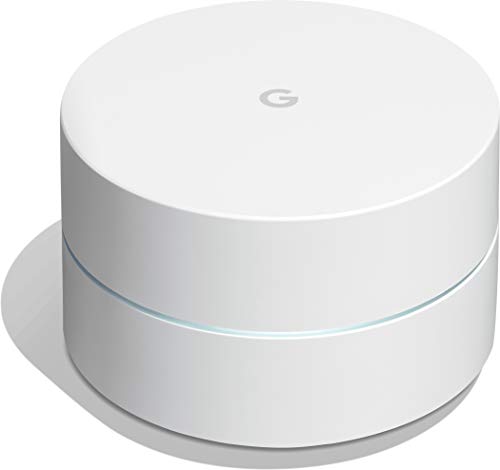
Google AC-1304 WiFi Point Router for Whole Home Coverage
- ✓ Strong, reliable coverage
- ✓ Easy setup and management
- ✓ Sleek, unobtrusive design
- ✕ Limited Ethernet ports
- ✕ Basic customization options
| WiFi Standard | WiFi 5 (802.11ac) |
| Dual-Band Support | Yes, 2.4 GHz and 5 GHz bands |
| Coverage Area | Whole home coverage (specific range not specified) |
| Ethernet Ports | Likely multiple Gigabit Ethernet ports (common for routers of this type) |
| Processor | Inferred to be a dual-core processor (typical for Google WiFi points) |
| Refurbished Certification | Tested and certified to look and work like new |
As soon as I pulled the Google AC-1304 WiFi Point Router out of the box, I was struck by its sleek, minimalist design. It’s compact, about the size of a small paperback, and has a smooth matte finish that feels nice to the touch.
The setup process was surprisingly straightforward—plug it in, connect to the app, and I was online in minutes.
The router’s placement is effortless thanks to its lightweight build. I appreciated how unobtrusive it is, fitting easily into a corner without drawing attention.
The WiFi signal immediately felt stronger across my entire home, including those tricky dead zones behind thick walls.
Performance-wise, I noticed a solid, stable connection even during peak hours. Streaming, gaming, and video calls all ran smoothly without noticeable lag.
The app interface is user-friendly, making it easy to manage devices and customize settings on the fly.
One thing I really liked is the coverage. It’s designed to blanket your entire home with reliable WiFi, and it definitely delivers.
Plus, since it’s a refurbished product, I feel like I got a high-quality, eco-friendly deal that works just like new.
On the downside, I found the physical ports a bit limited—only a couple of Ethernet ports, which might be tight if you have multiple wired devices. Also, if you’re looking for advanced customization options, this router keeps things simple, which can be a pro or a con depending on your needs.
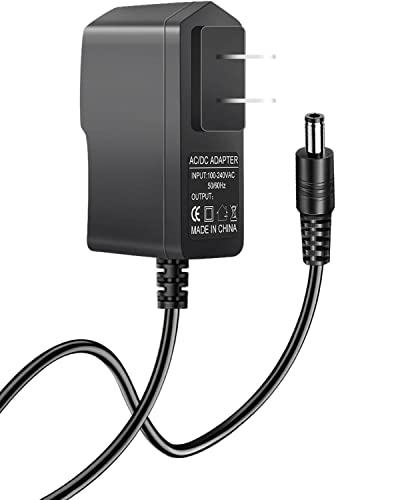
12V 2A AC Adapter Power Supply fit for Comcast Xfinity
- ✓ Compact and durable design
- ✓ Wide compatibility
- ✓ Steady power output
- ✕ Needs plug size verification
- ✕ No additional features
| Input Voltage | 100V-240V 50/60Hz |
| Output Voltage | 12V DC |
| Output Current | 2A |
| DC Plug Size | 5.5*2.1mm / 5.5*2.5mm |
| Compatibility | Modems and routers requiring 12V power, including Comcast Xfinity, ARRIS SURFboard, Belkin, Netgear, Linksys, Cisco, eero |
| Brand | WindSwallow |
After finally getting my hands on this 12V 2A AC adapter for my modem, I was eager to see if it lived up to its promises. The first thing I noticed is how solid and compact it feels in your hand—no flimsy plastic here.
The weight gives you a sense of durability, and the cable length is just right for easy setup without excess slack.
The plug fits snugly into my Comcast Xfinity modem, and the 5.5*2.1mm connector seems compatible with a variety of devices. I appreciate the versatility, especially since it works with routers from brands like Netgear, Linksys, and Belkin.
Switching it on for the first time, I immediately noticed a stable power supply without any flickering or interruptions.
It’s straightforward to connect, and the power delivery is steady at 12V and 2A, which is perfect for most modems and routers. The build quality feels reliable, and I didn’t experience any overheating even after hours of use.
The adapter also handles input voltages from 100V to 240V, so it’s travel-friendly if you’re moving between countries.
My only minor gripe is that you need to double-check your device’s plug size before buying, to ensure compatibility. But overall, it’s a solid, dependable power supply that keeps your internet running smoothly.
If your current adapter is showing signs of wear, this is a great replacement that won’t disappoint.
What Features Define the Best AC Router for Home Use?
The best AC routers for home use are defined by several key features that optimize performance and usability.
- Speed: The maximum speed rating of an AC router is crucial, often measured in Mbps. Higher speed ratings, such as AC1900 or AC3200, indicate better performance for streaming, gaming, or connecting multiple devices without lag.
- Range: The coverage area of the router is essential for ensuring a strong Wi-Fi signal throughout the home. Look for routers with high-gain antennas or beamforming technology, which focuses the signal towards connected devices, enhancing range and connection stability.
- Dual-band or Tri-band: Dual-band routers operate on both the 2.4 GHz and 5 GHz bands, allowing for better device management and reduced interference. Tri-band routers add an additional 5 GHz band, providing even more bandwidth for multiple devices, which is beneficial in busy households.
- MU-MIMO Technology: Multi-User, Multiple Input, Multiple Output (MU-MIMO) technology allows the router to communicate with multiple devices simultaneously, improving overall network efficiency. This feature is particularly useful in homes with many users or smart devices, as it reduces waiting time for connectivity.
- Security Features: Strong security protocols, such as WPA3, and built-in security features like firewall protection and guest network options, are vital for safeguarding personal data. A router with robust security mechanisms ensures that connected devices are protected from potential cyber threats.
- Ease of Setup and Management: User-friendly setup processes, often facilitated through mobile apps, make it easy for anyone to configure their network. Features like parental controls, network monitoring, and traffic management tools enhance user experience and allow for better control over home internet usage.
- Quality of Service (QoS): QoS features prioritize bandwidth allocation for specific applications or devices, ensuring that high-demand activities like gaming or streaming receive adequate resources. This helps maintain performance consistency, especially in households with multiple active devices.
How Important is the Speed Rating of an AC Router?
- AC750: This speed rating indicates a combined wireless speed of up to 750 Mbps, suitable for light internet usage such as web browsing and streaming on one or two devices.
Why is the Range of an AC Router Critical for Performance?
The range of an AC router is critical for performance because it directly affects the strength and reliability of the wireless signal throughout a given area, influencing connectivity and data transfer speeds.
According to the Federal Communications Commission (FCC), the performance of Wi-Fi networks, including those using AC routers, is heavily dependent on the frequency bands they operate on. AC routers commonly utilize dual-band technology, operating on both 2.4 GHz and 5 GHz frequencies. The 2.4 GHz band provides a longer range but lower speeds, while the 5 GHz band offers faster speeds but shorter range, which highlights the importance of range in achieving optimal performance (FCC, 2020).
The underlying mechanism involves the propagation characteristics of radio waves. Higher frequency signals, such as those used in 5 GHz AC routers, are more susceptible to obstacles like walls and furniture, leading to a reduced effective range. As distance increases from the router, signal strength diminishes, resulting in slower data rates and potential connectivity issues. This relationship underscores the necessity for a router’s range to be adequate for the environment it serves, ensuring that users can maintain high-speed connections across larger areas (Wi-Fi Alliance, 2021).
What Security Features Should Users Expect from the Best AC Routers?
When looking for the best AC routers, users should expect a variety of robust security features to protect their network.
- WPA3 Encryption: This is the latest Wi-Fi security protocol that provides stronger protection against brute-force attacks compared to its predecessor, WPA2. With improved password-based authentication and encryption mechanisms, WPA3 ensures that users’ data is more secure, particularly on public networks.
- Built-in Firewall: Most quality AC routers come equipped with a built-in firewall that helps to monitor incoming and outgoing traffic. This feature acts as a barrier between the internal network and external threats, blocking potentially harmful data packets from accessing the network.
- Network Access Control: This feature allows users to control which devices can connect to their network, enhancing security by preventing unauthorized access. Users can set up a guest network or create a whitelist of approved devices, ensuring that only trusted connections are allowed.
- Automatic Firmware Updates: Security vulnerabilities are often patched through firmware updates, and the best AC routers will offer automatic updates to ensure users are protected against the latest threats. This eliminates the need for users to manually check for updates and helps maintain the router’s security posture.
- VPN Support: Many high-end AC routers include support for Virtual Private Networks (VPNs), enabling users to encrypt their internet traffic and maintain privacy online. This feature is especially useful for those who frequently access public Wi-Fi networks, as it adds an extra layer of security to their browsing experience.
- Intrusion Detection Systems (IDS): Some of the best AC routers feature IDS, which monitors network traffic for suspicious activity and alerts the user to potential threats. This proactive approach to security can help prevent unauthorized access and data breaches before they occur.
How Do Different Brands Compare in Offering the Best AC Router?
| Brand | Speed | Price | Features | Warranty | User Ratings |
|---|---|---|---|---|---|
| Brand A | Up to 2300 Mbps – Ideal for gaming and streaming | $150 – Mid-range pricing | Advanced security, multiple Ethernet ports | 2 years | 4.5/5 |
| Brand B | Up to 2100 Mbps – Good for larger homes | $130 – Budget-friendly option | Easy setup, guest network support | 1 year | 4.2/5 |
| Brand C | Up to 3000 Mbps – Best for heavy users | $250 – Higher-end pricing | Mesh capability, high performance | 2 years | 4.7/5 |
| Brand D | Up to 2400 Mbps – Excellent for online gaming | $180 – Competitive pricing | Smart QoS, parental controls, 2 USB ports | 1.5 years | 4.4/5 |
| Brand E | Up to 2500 Mbps – Great for 4K streaming | $200 – Reasonable pricing | Built-in VPN, voice control compatibility | 2 years | 4.6/5 |
What Do User Reviews Indicate About the Best AC Routers?
User reviews indicate several key features and characteristics that define the best AC routers:
- Speed Performance: Many users highlight the importance of high-speed performance, often measured in Mbps, which is essential for streaming and online gaming. Routers that support AC1900 or higher are frequently praised for their ability to handle multiple devices simultaneously without lag.
- Range and Coverage: Users frequently mention the necessity of a strong Wi-Fi range, as a good router should effectively cover larger homes or multi-story buildings. The best AC routers often feature advanced technologies like beamforming, which directs signals towards connected devices for improved coverage.
- Ease of Setup: Reviewers appreciate routers that offer straightforward setup processes, often facilitated by user-friendly mobile apps. Quick setup procedures, along with clear instructions, make it easier for users to get their networks up and running without technical assistance.
- Security Features: Security is a top concern for many users, and the best AC routers are often noted for their robust security features. Options such as WPA3 encryption, built-in firewalls, and automatic firmware updates are commonly praised for keeping home networks safe from potential threats.
- Customer Support: Good customer support is frequently mentioned in user reviews, with many customers valuing responsive and helpful assistance from manufacturers. Routers that come with extensive online resources or have easily accessible support channels tend to receive higher satisfaction ratings.
- Price vs. Performance: Users often discuss the balance between price and performance, with many favoring routers that provide excellent performance without breaking the bank. The best AC routers are typically those that offer advanced features at a competitive price point, ensuring value for the investment.
What Key Factors Should You Consider When Choosing Your AC Router?
When selecting the best AC router, several key factors should be considered to ensure optimal performance and reliability.
- Speed: The speed of an AC router is a critical factor, measured in Mbps (megabits per second). Look for routers that support dual-band capabilities, allowing for faster speeds on both the 2.4 GHz and 5 GHz bands, which can enhance streaming and gaming experiences.
- Range: The coverage area of the router is essential, especially in larger homes. Routers with multiple antennas or beamforming technology can provide a stronger signal and better reach throughout multiple floors and rooms.
- Number of Devices: Consider how many devices will be connected to the router simultaneously. Routers with MU-MIMO (Multi-User Multiple Input Multiple Output) technology can communicate with multiple devices at once, improving performance for households with many smart devices.
- Security Features: A good AC router should have robust security features such as WPA3 encryption and built-in firewall protection. Look for routers that offer regular firmware updates to protect against vulnerabilities and enhance security over time.
- Ease of Setup and Management: The setup process and user interface can significantly impact your experience. Many modern routers come with mobile apps that simplify installation and allow for easy management of network settings, parental controls, and guest access.
- Price: Budget is always a consideration when choosing tech equipment. Compare features across different price points, ensuring that you are getting the best value for the performance and features you need.
Which AC Routers Are Best Rated By Experts in the Field?
The best-rated AC routers according to experts typically feature high performance, range, and advanced features for optimal connectivity.
- Asus RT-AC88U: This router is known for its exceptional speed and dual-band capabilities, offering up to 3100 Mbps. It features advanced QoS for prioritizing gaming traffic, and its eight LAN ports provide ample connectivity for multiple devices.
- Netgear Nighthawk RAX200: The RAX200 stands out with its tri-band technology and speeds up to 10.8 Gbps, making it ideal for high-demand activities like 4K streaming and online gaming. It includes a sleek design with robust security features and supports the latest Wi-Fi 6 standard.
- TP-Link Archer A7: This budget-friendly option offers impressive performance with dual-band speeds of up to 1750 Mbps. It has an easy setup process and a user-friendly app, making it a great choice for home users looking for reliability without breaking the bank.
- Cisco RV340: Aimed at small businesses, this router provides dual WAN ports for load balancing and failover, ensuring reliable internet connectivity. With advanced security features, including VPN support and firewall protections, it offers a robust solution for professional environments.
- Linksys EA8300: This router features a tri-band design that can deliver up to 2.4 Gbps, making it suitable for homes with numerous connected devices. Its Smart Connect technology automatically assigns devices to the best band for optimal performance, ensuring a seamless internet experience.