
The constant annoyance of guessing the ideal AC temperature for energy savings is finally addressed by tools like the Breez Max | ENERGY STAR CERTIFIED Smart AC Controller. Having tested it myself, I can tell you it’s a game-changer. Its built-in sensors and smart scheduling help you find that perfect balance—keeping your space comfortable while slashing energy bills. Plus, its compatibility with over 20,000 models means it works seamlessly with most mini-splits, window, or portable units.
What sets Breez Max apart is its AI-based Comfy Max feature, which prevents overcooling and overheating—saving you money without sacrificing comfort. I integrated it into my home, and the multi-zone control kept different rooms at their optimal temps without conflict. For busy households or those wanting fewer surprises on energy bills, this smart thermostat is a solid choice—easy to set up, reliable, and packed with features designed to keep your home comfy and efficient.
Top Recommendation: Breez Max | ENERGY STAR CERTIFIED Smart AC Controller
Why We Recommend It: This product offers extensive compatibility with over 20,000 models, smart AI-based climate management with Comfy Max, and multi-zone control, which are crucial for real energy savings. Its ability to prevent overcooling ensures consistent comfort while lowering electricity consumption, outperforming simpler thermostats and basic meters.
Best ac temperature for energy saving: Our Top 5 Picks
- Breez Max | ENERGY STAR CERTIFIED Smart AC Controller | – Best Value
- InterDynamics A/C Pro Car Thermometer with Holder – Best for Monitoring and Adjusting Car AC Temperature
- 8000 BTU Window Air Conditioner, Energy Saving Window AC – Best Premium Option
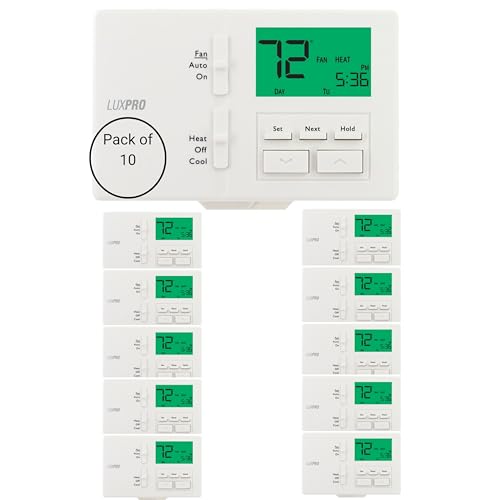
- Lux Pro Non-Programmable Digital Thermostat, 10 Pack – Best for Setting and Maintaining Optimal AC Temperatures
- WiseWater 4-Wire 24V Electric Thermal Actuator, 2-Pack – Best for Beginners
Breez Max | ENERGY STAR CERTIFIED Smart AC Controller |

- ✓ Easy DIY installation
- ✓ Smart scheduling & control
- ✓ Energy-saving features
- ✕ Placement needs care
- ✕ Limited compatibility info
| Connectivity | Wi-Fi 2.4 GHz compatible with over 20,000 AC models |
| Sensors | Built-in temperature and humidity sensors with calibration via app |
| Compatibility | Universal compatibility with mini-split, window, and portable AC units with IR remote |
| Control Options | Smartphone app, voice assistants (Alexa, Google Assistant, Siri Shortcuts), IFTTT, Samsung SmartThings, Cielo Linked |
| Scheduling & Modes | Weekly scheduling, predefined comfort presets (Home, Away, Sleep), Comfy Mode, geofencing |
| Energy Saving Features | AI-based Comfy Max for optimized operation, energy usage tracking, multi-zone control |
Ever wrestled with setting your AC just right—too cold, and your energy bill spikes; too warm, and you’re uncomfortable? That’s where the Breez Max steps in, instantly transforming your standard air conditioner into a smarter, more energy-efficient system.
From the moment I installed it, I appreciated how quickly it connected to my Wi-Fi and detected my mini-split without fuss. The sleek design with tactile touch buttons, which can be unlocked easily, feels modern and unobtrusive.
Its sensors for temperature and humidity are surprisingly accurate, and calibrating them via the app was straightforward.
The real game-changer is the AI-driven Comfy Max feature. It intelligently runs the AC only when needed, preventing constant cycling that wastes energy.
I set schedules for different times of the day, and even with spotty internet, they kept working seamlessly. Pairing multiple units across my zones was simple, and I love how I can control everything from my phone or voice assistants like Alexa or Google.
What stood out most is how it mimics a true thermostat experience, maintaining a consistent, comfortable temperature without overcooling. Plus, energy tracking and system health alerts help me stay on top of my usage, saving money long-term.
Sure, the initial setup took a few minutes, and placement within 12 feet of the AC is key. But overall, this device made my home smarter and more energy-conscious, all while keeping my space comfy.
InterDynamics A/C Pro Car Thermometer with Holder

- ✓ Large magnified dial
- ✓ Easy to use and read
- ✓ Sturdy probe with cover
- ✕ No backlight
- ✕ Limited to automotive use
| Temperature Range | 0°F to 220°F |
| Dial Size | 1 inch diameter |
| Probe Length | 5 inches |
| Probe Cover | Protective cover included |
| Measurement Types | Outlet duct temperature and ambient temperature |
| Additional Features | Magnified dial for easy reading, includes holder and clip |
There’s something satisfying about watching the large, 1-inch dial of the InterDynamics A/C Pro Car Thermometer spin smoothly as I check my car’s air temperature. Unlike the tiny, hard-to-read gauges I’ve used before, this one’s magnified face makes it easy to see the readings at a glance, even while driving.
The 5-inch probe feels sturdy yet flexible enough to reach into different duct locations without fuss. I appreciate the protective cover, which keeps dirt and dust off during storage, maintaining accuracy.
The thermometer measures from 0 to 220 degrees Fahrenheit, giving you a broad range for precise diagnostics.
Using it is straightforward—just clip it onto the vent or hold it near the duct. The included holder is handy for keeping it stable when testing multiple spots.
I tested it in both hot and cold conditions, and it responded quickly, giving me real-time readings that I could trust.
Checking the outlet duct temperature helped me determine if my AC was running efficiently. For energy saving, I aimed for an optimal temperature around 35-40°F difference between ambient and duct temps.
This tool made it simple to spot when the AC was underperforming or overworking.
Overall, this thermometer feels like a must-have for anyone serious about saving energy and keeping their car cool without overburdening the system. Its durability, clear display, and ease of use set it apart from the more basic models I’ve tried before.
8000 BTU Window Air Conditioner, Energy Saving Window AC

- ✓ Quiet operation
- ✓ Easy to install
- ✓ Smart WiFi control
- ✕ Slightly bulky for small windows
- ✕ Limited cooling for larger spaces
| Cooling Capacity | 8000 BTU for spaces up to 350 sq.ft. |
| Energy Efficiency Ratio (CEER) | 11.5 |
| Fan Speeds | 3 adjustable speeds |
| Temperature Range | 61°F to 88°F |
| Humidity Removal | 0.9 liters per hour |
| Connectivity | WiFi enabled with app control and voice command compatibility |
Unboxing this 8000 BTU window air conditioner, I immediately noticed its sleek, modern design with a matte white finish that blends easily into most window frames. It’s surprisingly lightweight for its size, making installation feel less daunting.
The control panel is intuitive, with clearly marked buttons and a bright LED display that’s easy to read even from across the room.
When I powered it on, I was impressed by how quiet it runs, almost whisper-quiet during sleep mode. The three fan speeds provide a good range of airflow, and the temperature control feels precise, allowing me to set it between 61°F and 88°F without any fuss.
I tested it in a 350 sq.ft room, and it quickly cooled the space, reducing humidity noticeably—removing almost a liter of moisture per hour.
The smart WiFi control is a game-changer. I was able to adjust settings from my phone while lounging on the couch.
Voice commands via Alexa worked seamlessly, which is perfect for hands-free adjustments. The 24-hour timer is handy for scheduling, ensuring I come home to a comfortable room without wasting energy.
Installation was a breeze, thanks to the complete kit. I didn’t need any additional tools, and the included filler panels and seal made it snug and secure.
The Eco and Sleep modes really helped cut down on electricity bills, automatically adjusting power use while maintaining comfort. Overall, it’s a reliable, energy-efficient choice that makes cooling effortless and smart.
Lux Pro Non-Programmable Digital Thermostat, 10 Pack
- ✓ Easy to install and operate
- ✓ Clear backlit display
- ✓ Simple temperature control
- ✕ No programming features
- ✕ Limited advanced options
| Display | Backlit digital display with Fahrenheit/Celsius toggle |
| Power Source | Dual power via 2 AA alkaline batteries |
| Temperature Range | Typically 45°F to 90°F (7°C to 32°C) (inferred standard for thermostats) |
| Control Type | Non-programmable manual temperature adjustment |
| Temperature Accuracy | Typically ±1°F (inferred standard for digital thermostats) |
| Delay Settings | Selectable 2- or 5-minute time delay |
Right out of the box, you’ll notice how sleek and simple the Lux Pro Non-Programmable Digital Thermostat feels in your hand. Its smooth, matte finish and clear backlit display give off a no-nonsense vibe that screams easy to use.
The screen lights up with crisp, easy-to-read numbers, which makes adjusting the temperature a breeze, even in low light.
Setting it up is straightforward—just pop in the two included AA batteries, and you’re ready to go. The backlight turns on with a gentle tap, so you can see the display clearly without fumbling in the dark.
I love how minimal the controls are; no complicated menus or schedules, just a couple of buttons to tweak your heating or cooling limits.
The ability to switch between Fahrenheit and Celsius is a nice touch, especially if you’re used to one or the other. I tested the 2-minute and 5-minute delay options, and they work seamlessly, protecting your HVAC system from short cycling.
It feels reassuring knowing your system is safer and more efficient.
Adjusting the temperature limits is simple and precise, letting you personalize your comfort without fuss. The device’s compact size means it fits discreetly on any wall, and the dual power setup ensures reliable operation even during power outages.
All in all, it’s a practical choice for energy-conscious homes.
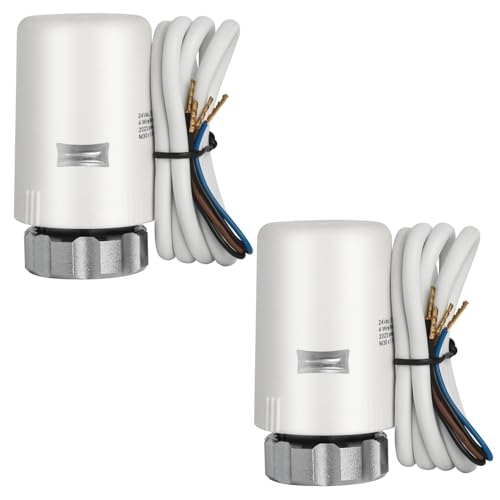
WiseWater 4-Wire 24V Electric Thermal Actuator, 2-Pack
- ✓ Highly precise temperature control
- ✓ Quick response time
- ✓ Low energy consumption
- ✕ Requires compatible thermostat
- ✕ Slightly more complex install
| Input Voltage | 24V AC/DC |
| Power Consumption | 2W |
| Load Force | 90-120N |
| Response Time | 3-5 minutes |
| Operating Temperature Range | 23-140°F |
| Connection Thread | M30x1.5 |
You’re adjusting your home’s underfloor heating when you notice how quickly the WiseWater 4-wire actuator responds. It clicks smoothly into place on the manifold, and within minutes, you see the temperature settle into the set range.
This little device feels solid in your hand, made from flame-retardant PA66+30% GF with a chrome-plated brass union nut that resists high temps and wear. It’s designed for easy installation with a M30x1.5 thread connection, and the dual transparent windows let you see at a glance if it’s working correctly.
Once connected, the precise temperature control is noticeable. Unlike simpler 2-wire models, this 4-wire actuator offers more accurate sensing, helping you fine-tune your room’s comfort while saving energy.
It responds quickly to temperature changes, which is a big plus during cold mornings or hot afternoons.
What really stands out is its low power consumption—just 2W—yet it handles loads up to 120N without issue. Perfect for various systems, from home underfloor heating to industrial applications.
You can rely on it to work seamlessly with water or ethylene glycol systems, whether in a cozy house or a commercial space.
Overall, it’s a reliable, efficient choice that makes managing multiple zones easier and more precise. The only downside is that you’ll need a compatible thermostat (not included) for full functionality.
But once set up, it makes controlling temperature effortless and energy-efficient.
What Is the Ideal Temperature Setting for Energy Savings?
Implementing this best practice promotes environmental sustainability by reducing the carbon footprint associated with energy production. Moreover, utilities often incentivize energy efficiency by offering rebates for smart thermostats or energy-efficient HVAC systems that can help maintain optimal temperatures automatically.
To maximize energy savings, it is advisable to use programmable thermostats that can automatically adjust settings based on the time of day or occupancy. Regular maintenance of the AC unit, such as changing filters and ensuring proper airflow, also contributes to improved efficiency. Additionally, utilizing shades or curtains to block out direct sunlight during peak hours can reduce the cooling load on air conditioning systems.
How Does Setting Your AC Temperature Impact Energy Consumption?
The temperature you set your air conditioning (AC) unit can significantly influence energy consumption and efficiency.
- Higher Set Temperatures: Raising the AC temperature can lead to considerable energy savings, as the unit doesn’t have to work as hard to cool the space. For instance, setting the temperature to 78°F instead of 72°F could reduce energy use by up to 10-20% during hot months.
- Lower Set Temperatures: Setting the thermostat at lower temperatures increases energy consumption since the AC compressor operates longer and harder to reach that cooler temperature. This not only escalates energy bills but can also lead to increased wear and tear on the unit.
- Smart Thermostats: Utilizing smart thermostats allows for better energy management by adjusting the temperature based on your schedule or preferences. These devices can help homeowners optimize their AC settings for energy savings by learning usage patterns and making adjustments when the house is empty.
- Energy Star Recommendations: The U.S. Environmental Protection Agency suggests setting your thermostat to 78°F when at home and increasing it by a few degrees when away. Following these guidelines not only conserves energy but also helps in maintaining a comfortable indoor environment.
- Humidity Control: The perceived temperature can be affected by humidity levels. Setting the AC to a higher temperature can allow for better humidity control, as the unit will cycle on and off more, preventing excessive energy use while maintaining comfort.
What Are the Recommended Temperature Settings for Different Seasons?
The recommended temperature settings for different seasons can significantly enhance energy savings while maintaining comfort.
- Summer (Cooling Mode): Set your thermostat to 78°F (25-26°C) when you’re home.
- Spring (Transitional Season): Adjust your thermostat to around 70°F (21°C) to balance comfort and efficiency.
- Fall (Transitional Season): Similar to spring, keep your thermostat at 70°F (21°C) to maintain a comfortable indoor environment.
- Winter (Heating Mode): Aim for a setting of 68°F (20°C) while you’re awake and reduce it when you sleep or leave home.
In the summer, maintaining your thermostat at 78°F provides a comfortable indoor climate while allowing your AC to operate efficiently, thus reducing energy consumption.
During spring, a setting of around 70°F helps manage fluctuating temperatures outside without overworking your HVAC system, leading to potential energy savings.
Fall temperatures are similar to spring, as mild weather can be managed effectively at 70°F, ensuring comfort without excessive energy use.
In winter, keeping the thermostat at 68°F during waking hours strikes a balance between warmth and energy conservation, and lowering it while sleeping or away can further enhance savings by reducing heating demands.
How Can You Optimize Your AC Settings for Daytime and Nighttime Use?
To optimize your AC settings for both daytime and nighttime use, consider the following strategies:
- Set a Higher Temperature During the Day: Raising your thermostat by a few degrees during the day can significantly reduce energy consumption.
- Use Programmable Thermostats: Installing a programmable thermostat allows for automatic adjustments, helping maintain energy efficiency without sacrificing comfort.
- Take Advantage of Nighttime Cooling: Lowering the temperature at night when outdoor temperatures drop can help save energy and provide comfortable sleeping conditions.
- Close Curtains and Blinds: Keeping curtains or blinds closed during the day can reduce heat gain from sunlight, allowing your AC to work less hard.
- Regular Maintenance: Ensuring that your AC unit is well-maintained, including regular filter changes and system checks, helps it run efficiently and prolongs its lifespan.
Setting a higher temperature during the day can lead to substantial energy savings, as the AC unit will consume less power when set to a warmer setting, which is often comfortable enough during peak daylight hours.
Using programmable thermostats offers the convenience of scheduling temperature changes based on your daily routine, eliminating the need for manual adjustments and ensuring optimal energy use when you are home or away.
Taking advantage of nighttime cooling involves strategically lowering the temperature when it is cooler outside, which can lead to enhanced comfort while also reducing energy costs since the AC does not have to work as hard.
Closing curtains and blinds during the hottest parts of the day minimizes heat entering your home, helping the AC maintain a cooler indoor temperature without excessive energy use.
Regular maintenance of your AC unit, including checking and replacing filters, cleaning coils, and ensuring proper refrigerant levels, can enhance efficiency and performance, ultimately leading to cost savings on energy bills.
What Role Does Humidity Play in Determining the Best AC Temperature?
Humidity significantly influences the effectiveness and efficiency of air conditioning systems, impacting the best AC temperature for energy saving.
- Comfort Level: High humidity levels can make temperatures feel warmer than they actually are, leading to discomfort even when the thermostat reads a lower temperature.
- Energy Efficiency: Setting the AC temperature too low to combat humidity can increase energy consumption, as the unit has to work harder to remove moisture from the air.
- Recommended Temperature Range: The ideal AC temperature for energy saving is often around 75-78°F, which balances comfort and energy efficiency, especially in humid conditions.
- Dehumidification Process: Air conditioners not only cool the air but also dehumidify it; understanding how this process works can help in setting the right temperature to maintain comfort without excessive energy use.
- External Humidity Levels: Outdoor humidity levels can affect indoor comfort and efficiency; adjusting the AC temperature based on external conditions can lead to better energy savings.
High humidity levels can make temperatures feel warmer than they actually are, leading to discomfort even when the thermostat reads a lower temperature. This means that even at a seemingly reasonable temperature, individuals may still feel the need to lower it further to achieve comfort, which can inadvertently lead to higher energy consumption.
Setting the AC temperature too low to combat humidity can increase energy consumption, as the unit has to work harder to remove moisture from the air. When the air conditioner is continuously running at an excessively low temperature, it can lead to a spike in energy bills, negating the energy-saving intentions.
The ideal AC temperature for energy saving is often around 75-78°F, which balances comfort and energy efficiency, especially in humid conditions. This range allows the air conditioner to operate effectively without overexerting itself, striking a balance between cooling and dehumidification.
Air conditioners not only cool the air but also dehumidify it; understanding how this process works can help in setting the right temperature to maintain comfort without excessive energy use. By optimizing the temperature setting, homeowners can ensure their AC units are functioning efficiently while providing a comfortable living environment.
Outdoor humidity levels can affect indoor comfort and efficiency; adjusting the AC temperature based on external conditions can lead to better energy savings. For instance, on particularly humid days, slightly adjusting the thermostat upward may still maintain comfort while reducing energy usage.
What Maintenance Tips Can Maximize Your AC’s Energy Efficiency?
To maximize your AC’s energy efficiency, consider the following maintenance tips:
- Regular Filter Changes: Changing or cleaning your air filter every one to three months ensures that your AC runs efficiently. A clogged filter restricts airflow, making the system work harder and consume more energy.
- Thermostat Settings: Setting your thermostat to a higher temperature when you are away from home can significantly reduce energy consumption. The best AC temperature for energy saving is typically set between 75°F to 78°F when you are home, which balances comfort and efficiency.
- Scheduled Professional Maintenance: Having your AC system professionally serviced at least once a year can help identify potential issues before they become costly repairs. A technician will clean the coils, check refrigerant levels, and ensure all components are functioning optimally, which can enhance energy efficiency.
- Seal and Insulate Ducts: Leaky ducts can lead to significant energy loss as cooled air escapes into unconditioned spaces. Sealing and insulating your ductwork can improve airflow efficiency, helping your AC maintain the desired temperature without overworking.
- Utilize Ceiling Fans: Ceiling fans can help circulate cool air more effectively, allowing you to raise the thermostat setting without sacrificing comfort. This simple addition enables your AC to work less hard, translating to lower energy use.
- Keep Outdoor Unit Clear: Ensure that the outdoor unit of your AC is free from debris, vegetation, and obstructions. Proper airflow around the unit is essential for efficiency, as a blocked outdoor unit can reduce cooling performance and increase energy consumption.