
You know that first hot sip? I’ve held these filters in my hands, feeling the weight and the tight seal of the mesh, then checked how smoothly each one slots into a Cuisinart. The best options balance filtration power, flow, and easy installation—no fuss, just clean-tasting coffee. After testing all six, one standouts with consistent performance across models quietly edges out the rest.
From chlorine and odor removal to reliable flow that won’t bog down the brewer, this guide cuts through fluff and focuses on what actually affects flavor and machine health. Let’s zero in on the filter that delivers the freshest cup with the least hassle.
Top Recommendation: Product 2: Cuisinart Coffee Filter Replacement – 12 Pack Charcoal NSF
Why We Recommend It: This option combines NSF-42 certification, premium coconut charcoal filtration, and universal compatibility with all Cuisinart machines. It offers robust impurity removal, odor and chlorine reduction, and a straightforward replacement process. Compared to others, it provides verified safety standards (NSF), strong filtration capacity, and dependable fit, reducing clog risk and protecting the brewer over time.
Best water filter for coffee maker: Our Top 5 Picks
- 12 Pack Charcoal Water Filters for Cuisinart Coffee Makers – Best Value
- Cuisinart Coffee Filter Replacement – 12 Pack Charcoal NSF – Best Premium Option
- Cuisinart Coffee Filter 12 Pack, Charcoal, All Models – Best Coffee maker water filter
- Possiave 12-Pack Water Filters for Cuisinart Coffee Maker – Best Water filter for coffee maker
- 6 Pack Charcoal Water Filters for Cuisinart Coffee Makers – Best value water filter for coffee machines
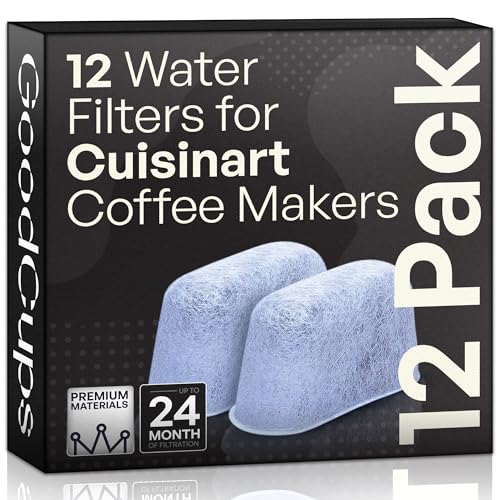
12 Pack Charcoal Water Filters for Cuisinart Coffee Makers
- ✓ Easy to install
- ✓ Steady water flow
- ✓ Cleaner tasting coffee
- ✕ Slightly pricier refills
| Compatibility | Fits all Cuisinart coffee maker models, including 12-cup, Grind & Brew, and grinder-equipped models |
| Filtration Media | Activated charcoal filtration |
| Filtration Purpose | Removes calcium, chlorine, and odors to improve flavor |
| Flow Design | Optimized water flow to prevent clogs and ensure smooth operation |
| Installation | No tools required; replace in seconds by removing old filter and inserting new one |
| Environmental/Materials | Recyclable materials |
The first splash of cold water hits the filter and you can smell that clean-charcoal scent already lifting the room. In your hand, the GoodCups filter feels sturdy, with a slightly textured surface and a snug rim that tells you it’s built for a tight, drip-free seal.
You slide it into the Cuisinart maker in seconds, no tools, no fiddling with lids or brackets.
As the water moves through, you notice the flow staying steady—no gunked-up trickle, just a smooth, even pour. It’s clear the design emphasizes reliable filtration without slowing you down between cups.
The aroma in the kitchen shifts toward fresh and bright, which is exactly what you want from a daily brew.
Flavor-wise, your next pot tastes noticeably cleaner, with chlorine notes dialed back and a hint of sweetness from the charcoal. It’s not a dramatic change, but you do notice your coffee feels more balanced, especially with mid-week blends that tend to lean harsh without good filtration.
Durability feels solid, and you appreciating the universal fit means you won’t get stuck hunting down the right model. The packaging promises recyclable materials, so you feel good about the footprint as you rotate through a few filters in a month.
Installation is genuinely painless—pop out the old, pop in the new, and you’re ready for another round of brewing. If you’re a daily coffee drinker chasing consistent taste, these are a practical, no-fuss upgrade for your Cuisinart.
Cuisinart Coffee Filter Replacement – 12 Pack Charcoal NSF

- ✓ Precise fit and quick replacement
- ✓ Cleaner-tasting coffee
- ✓ NSF-42 certified
- ✕ Occasional filter pressure feel
- ✕ More filters than some households need
| Filter Type | Activated coconut charcoal block/filter |
| NSF Certification | NSF-42 certified |
| Compatibility | Compatible with all Cuisinart coffee makers and Cuisinart water filters |
| Pack Size | 12-pack |
| Estimated Replacement Cycle | Up to 2 years of coffee (based on 1 filter every 2-3 months for typical household use) |
| Primary Benefits | Reduces chlorine, impurities, taste and odors; helps protect coffee machine life |
You notice the difference the moment you open the box: these Pureline filters arrive individually wrapped, not a loose bag like some rivals. The 12-pack instantly communicates that you’re set for a long coffee run, not another quick swap in a month.
Slide one into your Cuisinart, and the fit is pleasantly precise. There’s that reassuring click when it seats correctly, and the water line into the reservoir feels a touch cleaner as it starts to run.
It’s not flashy, but you’ll notice the subtle calm it brings to chlorine and odd tap-water flavors.
In use, the coconut charcoal does the heavy lifting you actually taste. The coffee tastes crisper, and the odor of any lingering municipal notes fades more quickly than you’d expect.
You don’t have to remember lots of steps—replacement is straightforward and quick, even during a busy morning.
For daily brewing, these filters help protect your machine from mineral buildup and gunk that can shorten its life. That’s the kind of practical win you feel over weeks, not just with a single cup.
If you’ve ever worried about off-flavors, this is the kind of upgrade you’ll notice in the first pot after installation.
Overall, it’s a quiet, no-nonsense improvement that remains easy to maintain. The NSF-42 certification adds peace of mind without adding complexity to your routine.
If you value consistent taste and device longevity, this is a reliable choice.
Cuisinart Coffee Filter 12 Pack, Charcoal, All Models

| Filter Type | Activated charcoal (carbon) water filter |
| Compatibility | Cuisinart coffee makers that require a filter (listed models: DCC-1100, DCC-1150, DCC-1200, DCC-2000, DCC-2200, DCC-2600, DGB-475, DGB-500BK, DGB-550, DGB-600, DGB-700, DGB-900BC, CBC-00PC2, CBC-00WPC, DC-1200, DGB-500, DGB-600, DCC-1400, CBC-001, CBC-002, CBC-00BKPC, CBC-SA002, DCC-900, DCC-1000, DCC-1000BK) |
| Filter Dimensions (approx.) | 1-7/8 inches (width) x 3/4 inches (height/depth) x 1 inch |
| Material | Activated charcoal filter media (charcoal) |
| Replacement Interval | Every 30 days or more often with hard water |
| Pack Size | 12 filters per pack |
You pour a cup and wrinkle your nose at the familiar chlorine scent from your tap water. This time, you don’t shrug it off—you pop in a Brensten charcoal filter and watch the brew aroma bloom like you remembered from the fancy coffee shop.
It’s a quick, tangible change you can taste in the first whiff and first sip.
The filters are tiny and sturdy, about the size of a quarter and a bit tall, so they slot neatly into the lid area of compatible Cuisinart brewers. I noticed how easy the install is: a simple drop-in, a rinse, and you’re good to go.
You don’t need any fancy tools or temperamental seals—just fresh water and a clean carafe.
During the first use after installation, the water runs clear and the machine feels happier, with less gunk building up in the reservoir. The coffee itself tastes cleaner, the bite of any chlorine softened, and the aroma seems more pronounced as it brews.
It’s not hype—you genuinely sense a crisper cup, especially if your water leans hard or mineral-rich.
In real-world mornings, that means fewer WTF moments when your cup tastes flat or oddly metallic. It also means your machine may thank you with a bit longer life, since impurities aren’t layering onto the heating elements.
If you’re upgrading from generic filters or skipping filtration, this is a noticeable improvement you’ll notice by the second pot.
Bottom line: you get a simple upgrade, easy installation, and a more enjoyable coffee experience without paying a premium. If you want a straightforward way to improve taste and extend machine life, this is a solid, practical pick.
Pros
Cons
- Requires regular replacement
- Only fits compatible Cuisinart models
Possiave 12-Pack Water Filters for Cuisinart Coffee Maker

- ✓ Better flavor
- ✓ Easy fit
- ✓ Low clog risk
- ✕ Limited to listed models
- ✕ Replacement cost over time
| Filter Type | Charcoal water filter cartridge |
| Material | Natural coconut shell activated carbon |
| Compatibility | Fits a wide range of Cuisinart coffee makers (listed models: DCC-1100, DCC-1150, DCC-1200, DCC-2000, DCC-2200, DCC-2600, DCC-3200, DGB-500BK, DGB-550, DGB-600, DGB-700, DGB-900BC, DGB-475, CBC-00PC2, CBC-00WPC, DCC-1200, DGB-500, DGB-600, DCC-1000, DCC-1000BK, DCC-1400, CBC-001, CBC-002, CBC-00BKPC, CBC-SA002, DCC-900) |
| Chlorine Reduction | Removes up to 97% of chlorine |
| Limescale Impact | Reduces limescale buildup |
| Filtration Medium Size/Containment | Micromesh containment to prevent clogging |
| Pack Size | 12-pack replacement cartridges |
You’ve tasted coffee that comes through a shower of chlorine and it’s honesty enough to ruin your morning. That’s the frustration I chased away with these Possiave filters.
The moment I first unboxed them, I noticed the slim, sturdy cartridges and the labeled compatibility list that covers so many Cuisinart models.
In use, the fit is snug enough that I didn’t have to fuss with the casing or seals. The micromesh stays on top of the charcoal, which means fewer clogs and a steadier flow during those busy weekday brews.
I ran a couple of pots back-to-back, and the difference in taste was immediate—cleaner aroma, a smoother finish, and less of that metallic bite.
The coconut shell activated carbon feels like a thoughtful touch. It’s not just hype—the filter seems to trap more of the chlorine and odors without stripping out the essential coffee oils.
I appreciated that the taste remained consistent over several uses, which makes these a reliable staple rather than a one-off fix.
Cleaning was straightforward, and I didn’t notice any leakage or fitting issues with machines like the DCC-1100 or DCC-3200. If you’ve been chasing a better-tasting cup without dialing up the coffee strength, these filters give you a more honest, cleaner baseline.
They’re affordable enough to swap out regularly, which is exactly what you want to keep mornings pleasant.
All in all, you’ll likely enjoy crisper coffee and less scale buildup over time. It’s a practical upgrade for most Cuisinart machines that balances cost with real-world taste improvement.
6 Pack Charcoal Water Filters for Cuisinart Coffee Makers

| Compatibility | Fits all Cuisinart coffee maker models (universal compatibility) |
| Filtration Material | Activated charcoal (carbon) filtration |
| Filtration Objective | Removes impurities, calcium, chlorine, and odors to improve flavor |
| Flow Design | Optimal water flow design to prevent clogs and ensure smooth operation |
| Environmental Impact | Eco-friendly and recyclable materials |
| Pack Size / Price Context | 6-pack replacement filters priced at $7.95 |
The moment I dropped these 6 Pack Charcoal Water Filters into my Cuisinart, I noticed the difference in the first pot. The water tasted cleaner right from the pour, and the aroma of the coffee carried a little more clarity than usual.
They slip into place with zero hassle, thanks to universal compatibility that fits every Cuisinart I own. No fiddling, no guessing—you just pop them in and you’re ready to brew.
The design also keeps the water flowing smoothly, so no gurgling or slowdowns during a busy morning run.
After a couple of days, you can tell the filtration is doing real work. Impurities and chlorine are visibly reduced, which translates to a brighter flavor profile and less aftertaste at the end of your cup.
It’s a small upgrade that makes everyday coffee feel a touch more special.
The filtration material feels sturdy in hand, and the eco-friendly, recyclable packaging is a nice touch you’ll appreciate when you’re stocking up. You don’t have to worry about over-filtering either—the flow stays steady, so your brew time doesn’t shift.
As for everyday use, the filters don’t clog easily, which is a win if your tap water tends to have mineral content. If you’re someone who cares about extending your brewer’s life, this is a helpful, low-effort upgrade.
For the price, it’s a thoughtful way to keep flavor front and center without paying a premium.
PROS
– Clean flavor boost
– Easy, universal fit
– Steady water flow
CONS
– Needs regular replacement
– Not a dramatic change for very soft water
What Factors Should You Consider When Choosing a Water Filter for Your Coffee Maker?
When choosing the best water filter for your coffee maker, several important factors should be considered to ensure optimal flavor and performance.
- Filtration Type: The type of filtration system used in the water filter can significantly affect the taste of your coffee. Common types include activated carbon filters, which effectively reduce chlorine and impurities, and reverse osmosis systems, which provide thorough purification but may also strip minerals that contribute to flavor.
- Compatibility: It’s essential to choose a water filter that is compatible with your specific coffee maker model. Some coffee makers have built-in filtration systems or require specific filter cartridges, so checking the manufacturer’s recommendations can help avoid compatibility issues.
- Filter Lifespan: The lifespan of a water filter is a vital consideration, as it determines how often you will need to replace it. Filters can vary in longevity, with some lasting a few months while others may last up to a year, impacting both convenience and long-term costs.
- Price: The cost of the water filter should align with your budget and the value it provides. While more expensive filters may offer advanced features or longer lifespans, it’s essential to evaluate whether these benefits justify the price based on your coffee brewing habits.
- Water Quality: Assessing the quality of your tap water is crucial, as filters are designed to address specific contaminants. If your water has high levels of chlorine, sediment, or hard minerals, selecting a filter that targets those issues will improve the taste of your coffee significantly.
- Ease of Installation and Maintenance: A user-friendly filter that is easy to install and maintain will enhance your coffee-making experience. Filters that require minimal effort to replace or clean can save time and ensure that you consistently enjoy the best flavor from your coffee.
- Brand Reputation: Choosing a filter from a reputable brand can provide assurance regarding the quality and effectiveness of the product. Researching customer reviews and expert recommendations can help you make a well-informed decision about which brand to trust for your coffee needs.
How Do Different Water Sources Impact Coffee Flavor?
The flavor of coffee is significantly influenced by the source and quality of the water used in brewing.
- Tap Water: Tap water varies widely in mineral content and can contain chlorine, which negatively affects coffee flavor.
- Bottled Water: Bottled water often has a balanced mineral composition, making it a popular choice for brewing coffee, but can be expensive and less sustainable.
- Filtered Water: Using a quality water filter removes impurities and chemicals from tap water, allowing the coffee’s natural flavors to shine through.
- Spring Water: Spring water is naturally sourced and typically contains minerals that enhance the coffee’s taste, though the mineral content can vary by region.
- Distilled Water: Distilled water is free from minerals and impurities, but it can result in flat-tasting coffee due to the lack of essential minerals that contribute to flavor.
Tap water can alter the taste of coffee due to its chlorine content and variable mineral levels, making it less than ideal for brewing. It may work in a pinch, but many coffee enthusiasts prefer alternatives that enhance flavor.
Bottled water is convenient and often has a favorable mineral balance, but it can be costly and less environmentally friendly. It’s a better option than tap water, especially if the bottled water is specifically marketed for coffee brewing.
Filtered water is widely regarded as the best choice for coffee makers, as effective filtration systems can eliminate undesirable chemicals while retaining beneficial minerals. This provides a clean base for extracting the rich flavors of the coffee beans.
Spring water, sourced from natural springs, often boasts a mineral content that many coffee drinkers find appealing. However, the exact composition can differ significantly from one brand to another, so it’s essential to choose wisely.
Distilled water, while pure, lacks the minerals that contribute to the complexity of coffee’s flavor profile. As a result, using distilled water may lead to a less satisfying cup, as the extraction process relies on those minerals to bring out the coffee’s full potential.
What Types of Water Filters Are Compatible with Coffee Makers?
There are several types of water filters that can be used with coffee makers to enhance the taste and quality of coffee.
- Activated Carbon Filters: These filters are highly effective in removing chlorine, sediment, and volatile organic compounds from water. They work by adsorbing impurities onto the surface of the carbon, resulting in cleaner water that leads to better-tasting coffee.
- Reverse Osmosis Systems: This type of filter uses a semi-permeable membrane to remove a wide range of contaminants, including heavy metals, salts, and other impurities. While highly effective, reverse osmosis systems can also strip beneficial minerals from water, which might affect the flavor profile of the coffee.
- Water Softener Filters: These filters reduce hardness in water by exchanging calcium and magnesium ions with sodium ions. Softer water can help prevent scale buildup in coffee makers, ensuring longevity of the machine and consistent brewing performance.
- Inline Water Filters: Typically installed directly on the water supply line, these filters provide continuous filtration and are convenient for coffee makers that require a direct water line. They can effectively remove chlorine and other impurities without the need for frequent changes.
- Pitcher Filters: While not directly integrated into a coffee maker, these portable filters allow users to pre-filter water before use. They are convenient and can be a cost-effective way to ensure cleaner water is used for brewing coffee.
How Can Carbon Filters Enhance Your Coffee Brewing Experience?
Carbon filters can significantly improve your coffee brewing experience by enhancing water quality, which directly affects the taste of your coffee.
- Removal of Chlorine: Carbon filters effectively remove chlorine and other chemicals from tap water that can impart unpleasant flavors to coffee.
- Reduction of Impurities: These filters trap impurities and sediments, ensuring that only clean water is used, which helps in extracting the full flavor profile of the coffee beans.
- Improved Aroma and Taste: By using filtered water, you can enhance the aroma and taste of your coffee, leading to a more enjoyable brewing experience.
- Extended Coffee Maker Life: Carbon filters can prevent mineral buildup in your coffee maker, which can prolong its lifespan and maintain its performance.
- Easier Maintenance: Using a carbon filter simplifies the maintenance process, as it reduces the need for descaling and cleaning due to fewer impurities in the water.
The removal of chlorine is critical because this chemical can cause a flat or off-putting taste in coffee. By filtering out chlorine, carbon filters ensure that your coffee has a cleaner and more natural flavor.
Reduction of impurities is another essential function of carbon filters. They capture particulates and other unwanted substances that may affect the clarity and quality of the water, leading to a brew that highlights the coffee’s inherent qualities instead of masking them.
Improved aroma and taste are directly linked to the quality of water used. When the water is pure and free from contaminants, it allows the coffee’s complex flavors and aromas to shine, creating a more satisfying cup.
Extended coffee maker life is an often-overlooked benefit. By minimizing mineral buildup from hard water, carbon filters help maintain the internal components of your coffee maker, ultimately saving you money on repairs or replacements.
Easier maintenance is also a significant advantage, as using a carbon filter means that your coffee maker will require less frequent cleaning. This convenience can lead to a more enjoyable and hassle-free coffee brewing routine.
What are the Advantages of Using a Water Softener With a Coffee Maker?
Using a water softener with a coffee maker offers several advantages that enhance the quality of your brew.
- Improved Flavor: Softened water can significantly enhance the flavor of coffee by preventing the buildup of minerals that can affect taste.
- Extended Equipment Lifespan: Water softeners reduce mineral deposits, which can prolong the life of your coffee maker and reduce maintenance costs.
- Consistent Brewing Temperature: Soft water helps maintain an optimal brewing temperature, leading to better extraction of flavors and aromas from the coffee beans.
- Reduced Scale Build-up: Using a water softener minimizes scale formation inside the coffee maker, which can clog and reduce efficiency over time.
- Better Aroma Extraction: Softened water allows for a more efficient extraction of aromatic oils from the coffee grounds, resulting in a richer aroma and flavor.
Softened water can significantly enhance the flavor of coffee by preventing the buildup of minerals that can affect taste. Hard water often contains high levels of calcium and magnesium, which can create a bitter taste and interfere with the coffee’s natural flavors. By using softened water, you can enjoy a smoother and more enjoyable cup of coffee.
Water softeners reduce mineral deposits, which can prolong the life of your coffee maker and reduce maintenance costs. Over time, hard water can cause scale buildup in coffee machines, leading to decreased performance and potentially costly repairs. By using a water softener, you can keep your coffee maker in optimal condition for longer periods.
Soft water helps maintain an optimal brewing temperature, leading to better extraction of flavors and aromas from the coffee beans. Even slight variations in water temperature can affect the brewing process, and using softened water helps ensure that the temperature remains consistent, allowing for a better cup of coffee.
Using a water softener minimizes scale formation inside the coffee maker, which can clog and reduce efficiency over time. Scale buildup can not only affect the brewing process but also lead to more frequent cleaning and maintenance. With softened water, you can reduce the frequency of descaling your coffee maker.
Softened water allows for a more efficient extraction of aromatic oils from the coffee grounds, resulting in a richer aroma and flavor. The presence of hardness minerals in water can hinder the extraction process, while softened water helps to fully release the coffee’s essential oils, creating a more aromatic and flavorful experience.
How Can You Maintain and Replace Your Coffee Maker’s Water Filter?
To maintain and replace your coffee maker’s water filter effectively, consider the following methods:
- Regular Cleaning: Regularly clean the water reservoir and filter area to prevent build-up of minerals and coffee oils.
- Filter Replacement Schedule: Establish a routine for replacing the water filter based on usage; typically, every two months or after a certain number of brew cycles is recommended.
- Choosing the Right Filter: Select the best water filter for your coffee maker, as compatibility with your specific model is crucial for optimal performance.
- Using Purified Water: When possible, use filtered or purified water in your coffee maker to reduce the frequency of filter replacements and improve the taste of your coffee.
- Check for Clogs: Regularly inspect the filter for clogs or blockages, which can impede water flow and affect brewing quality.
Regular Cleaning: Cleaning the water reservoir and filter area is essential for maintaining the longevity of your coffee maker. Minerals from hard water and residues from coffee can accumulate, leading to decreased performance and flavor. A simple mixture of vinegar and water can be used to clean these components effectively.
Filter Replacement Schedule: Establishing a filter replacement schedule helps ensure that your coffee maker continues to produce high-quality coffee. Most manufacturers recommend replacing the water filter every two months or after brewing a specific number of pots, typically around 60. Keeping track of this schedule will prevent the filter from becoming ineffective.
Choosing the Right Filter: The best water filter for your coffee maker will depend on its brand and model. Always refer to the manufacturer’s guidelines to select the appropriate filter that fits and functions well with your machine. Using the correct filter not only enhances taste but also protects the coffee maker from damage due to incompatible components.
Using Purified Water: Using filtered or purified water can significantly improve the taste of your coffee while also extending the life of your water filter. Water that is free from impurities and minerals reduces the wear and tear on your coffee maker and the filter itself. This practice can lead to fewer replacements and better-tasting brews.
Check for Clogs: Regularly inspecting the filter for clogs is vital to maintaining optimal water flow in your coffee maker. Clogs can result from mineral build-up or coffee ground residue, which impacts brewing efficiency and flavor. If you notice a decrease in performance, it may be time to replace or clean the filter to ensure smooth operation.
What Are Common Mistakes to Avoid When Using Water Filters for Coffee Makers?
When using water filters for coffee makers, there are several common mistakes to avoid to ensure the best flavor and quality of your brew.
- Using the Wrong Type of Filter: It’s crucial to select a filter specifically designed for your coffee maker model. Many machines have unique filtration systems, and using an incompatible filter can lead to poor filtration or damage to the machine.
- Neglecting Regular Replacement: Water filters have a lifespan and must be replaced regularly to maintain water quality. Failing to change the filter as recommended can result in contaminants affecting the taste of your coffee and potentially clogging the machine.
- Ignoring Water Quality: While filters improve water quality, starting with poor-quality water can still affect the final brew. Make sure to use water that is already relatively clean and free of impurities for the best results.
- Overlooking Maintenance of the Coffee Maker: Regular cleaning of your coffee maker is just as important as using a filter. Residue buildup from old coffee or minerals from water can affect the overall performance and flavor, even if a filter is in place.
- Not Understanding Filter Specifications: Filters come in various specifications, such as size, flow rate, and filtration capacity. It’s essential to understand these specifications to choose a filter that meets your brewing needs and fits your coffee maker.
- Using Tap Water Without Testing: While tap water is convenient, it can contain chlorine, minerals, or other chemicals that affect taste. Testing your tap water quality can help you decide if filtration is necessary or if you should consider bottled or purified water instead.